Last week I posted this article on my other blog Outside Economics and many people enjoyed reading the article. I thought I would repost it here so you would have the latest on what is going on in Europe and what could happen here in the U.S.. If you like the article please subscribe to Outside Econoimics for future great articles and make a comment below. Thank you.
The great recession has left its mark on many of us in so many ways it is hard to understand them all - perhaps similar for generations before with the Great Depression. One major mark is in banking. The Great Depression produced the FDIC which insured customer deposits and help provide a level of financial security to the banking system. Now Europe and the European Union has lead the way with a “bail-in” concept where depositor bank accounts are used to shore up the troubled bank, thus taking the tax payers off the hook for failed banks.
This week Austria put this to the test. Hypo Alpe Adria (HETA) collapsed under the weight of bad loans. The bank is located in the Province of C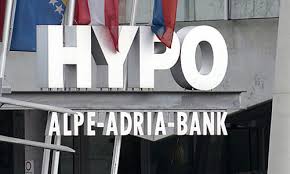 arinthia, which has mostly controlled the bank for the past year, when it first started having problems. In taking on the obligation of this bank Carinthia is worried that it may cause the Province to file for bankruptcy as well.
The Austrian Financial Market Authority (FMA) in its role as the resolution authority for failed banks has issued the key features for the steps to resolution. The Bank Recovery and Resolution Act (BaSAG) outlines how the issues surrounding failed banks are to be resolved. The most significant are:
- A 100% bail-in for all subordinated liabilities,
- A 53.98% bail-in, resulting in a 46.02% quota for all eligible preferential liabilities,
- The cancellation of all interest payments from 1 March 2015, when HETA was placed into resolution pursuant to BaSAG
- As well as a harmonization of the maturities of all eligible liabilities to 31 December 2023.
Subordinated liabilities is simply another term for depositor’s money in the bank. In the typical banking arrangement the bank’s assets are the loans on the books, while their creditors are all the depositors. The exact opposite of personal or business finance, where loans are liabilities and cash deposits are part of their assets.
This sort of “bail-in” can cause a lot of panic in finance world, simply because people losing their deposits can demonstrate some serious concerns about how well a bank is operated. Clearly an uncharted path. Some concerns exist over the legal as well as the practical aspects of the “bail-in” concept. This makes the creditors of the bank more responsible for how the bank is run. If there appears to be any problems creditors simply will not lend money to a bank or if they do they will demand a much higher risk premium. This will of course raise interest rates for everyone.
Corinthia attempted to remove the guarantees by purchasing the bonds at a discount from the bond holders, primarily Commerzbank, AG and Pacific Investment Management Co., (PIMCO), who rejected this offer last month. The creditors are demanding that Austria pay up if Carinthia cannot pay. In either case the depositor’s monies are gone.
This rule was put into place after the Great Recession to help relieve the burden on the tax payers for bailing out banks. The results are yet to be determined, but like every regulation there are unintended consequences. Some of those consequences maybe, higher interest rates, depositors being extra cautious where they deposit their paychecks, fewer loans made to small or medium size businesses, bankers will be unwilling to take risks with business owners on such loans.
In The United States
You maybe asking yourself why does this bank in Austria matter to me? Here is the short answer; YES; the United States banking regulators have adopted a similar rule. When a bank fails the regulators can force a bail-in of depositors monies to right the ship. Many people do not realize or understand that this can and most likely will wash up on the shores of America as soon as we have another major financial melt-down. Watching how this precedent action plays out may be an example of how it will work here in the States.
I am clearly not suggesting that you take your money out of the banking system and hide it under your mattress, that would be foolish. Also I think that U.S. banks operate with safety and soundness regulations that help protect depositors money. This maybe one reason why gold and silver has shot up in price this past week. People still perceive precious metals as a safe haven for currency problems.
 My brother-in-law use to take me backpacking when I was a teenager in the High Sierras. There is no place like the High Sierras in the world (so I am told by the many people we met on the trail from other countries). The time spent there I learned again to love our country and its amazing beauty. I have traveled to many of the other states in the Union on business, and I am always amazed at what a wonderful country we have. It is truly special. I personally believe that God put all the right elements here so a nation could thrive and spread goodness throughout the world.
 We have the world’s strongest best trained military. Now I know many people say we dwell too much on the military or spend too much on the military, etc. I have heard all of that, including we should not be in this country or that country, we should not be the world’s police force – we should just stay home and mind our own business. The reality of being the world’s police force is this, if we are not there to serve, some other super power will be called in to serve. So would we rather have China, Russia, or someone else in those countries? What would be the political frame work they would leave behind? Now I know that not everything is rosy with the military there are a few bad apples that commit crimes, etc. But by and large they are great people who serve and truly bless the lives of the people in those countries. An opportunity to help these struggling countries blesses everyone involved.
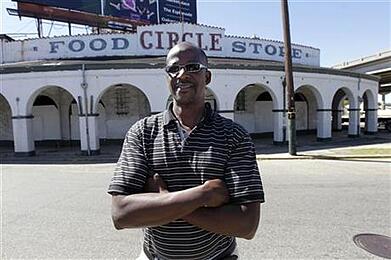 Hope Credit Union is an example of the CDFI Fund’s programs creating economic growth in communities often considered too risky for mainstream financial institutions. Circle Foods opened in 1939, was New Orleans first African American-owned and operated grocery store. In 2005, Circle Foods was heavily damaged by flooding in the 7th Ward caused by Hurricane Katrina. For years, the owner tried to secure financing to renovate and reopen the store, but was unable to find any willing lenders and investors.
 out of Washington, D.C., Who is going to help you solve this problem? And help you get and stay compliant? The regulators have a few thoughts on using consultants we believe will help you…
 Community Banks have a critical role in keeping their local economies vibrant and growing by lending to creditworthy borrowers in their regions. They often respond with greater agility to lending requests than their national competitors because of their detailed knowledge of the needs of their customers and their close ties to the communities they serve. Such lending helps foster the economy by allowing businesses to buy new equipment, add workers or sign contracts for increased trade or services. Customer knowledge also gives community bankers a real-time understanding of customer demands and provides them with an opportunity to respond more aggressively to those demands – particularly in regard to the use of technology.