
The Shutdown No One Asked For
-
Wendell Brock
- Dec 3, 2025
- 2 min read
In October 2025, the United States entered the longest federal government shutdown in its history after Congress failed to pass full-year appropriations for fiscal year 2026. The lapse began on October 1 and dragged on for 42 days, 22 hours, and 25 minutes before lawmakers finally reached a funding deal in mid-November.
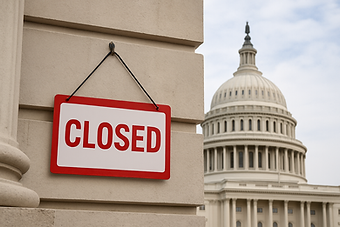
The standoff centered on spending levels, with Senate Democrats rejecting a short-term Republican funding bill. Much of the dispute revolved around health-care funding, particularly ACA tax credits. Without a continuing resolution, all non-essential federal operations ground to a halt.
The economic fallout was immediate. Goldman Sachs estimated each week of the shutdown reduced annualized GDP growth by about 0.2 percentage points and cost roughly $15 billion in lost economic activity. The Congressional Budget Office projected permanent losses of $7–14 billion even after recovery. Consumer demand weakened as hundreds of thousands of workers missed paychecks, and uncertainty spread across industries dependent on federal contracts. Key programs, from CHIPS Act initiatives to semiconductor and quantum manufacturing, faced delays, according to Democratic lawmakers.
Roughly 900,000 federal employees were furloughed, with hundreds of thousands more working without pay as “excepted” personnel. Thanks to a 2019 law, most were guaranteed retroactive pay once the government reopened. Still, delays in economic data, passport services, and other federal functions eroded public confidence.
Shutdowns also tend to worsen the deficit. Restarting agencies and catching up on delayed work often requires extra funding, meaning the government ultimately spends more than if operations had continued uninterrupted.
Congress finally approved a funding package on November 12, ending the shutdown. The agreement extended current spending through January 30, 2026, and fully funded three of the twelve appropriations bills, Agriculture; Military Construction & Veterans Affairs; and the Legislative Branch (naturally, the branch responsible for the shutdown ensured its own funding). The deal also reversed recent workforce cuts, halted further layoffs, and formalized back pay for furloughed employees.
In practical terms, the shutdown disrupted normal economic activity and cost taxpayers more money, all while federal employees endured what amounted to a 42-day paid vacation while Congress had a paid temper tantrum. As David Wessel of the Brookings Institution observed, shutdowns inflict real-world economic damage far beyond political theater.
The 2025 shutdown serves as a reminder of how fragile political consensus can undermine economic stability, and how essential it is for Congress to do its job.