Outside Economics

Avalanche Your Debt

Posted by Wendell Brock on Thu, Jun 27, 2024

Avalanche Your Debt

  • Wendell Brock
  • Jun 27, 2024
  • 2 min read

A new epidemic is spreading across our country, fueled by inflation, credit cards, and “buy now pay later” options for almost all online purchases. This seemingly  invisible epidemic is spreading at an alarming rate. Have you guessed it? Consumer debt.


Our country is racked with debt. So far, in 2024, the average personal debt increased from $21,800 to $22,713. About 13% of that comes from auto loans, but over 28% comes from credit card debt. Only about 23% of American’s are debt free, and about 65% of American’s say they are living paycheck to paycheck, an increase from last year which was about 58% of Americans. It’s becoming more important than ever to pay off debt and stay out of debt.

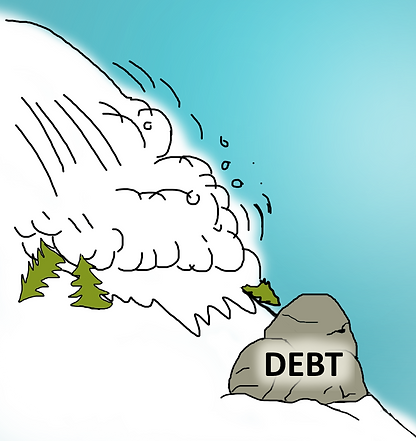
When tackling your debt you need to have a plan. There are many strategies for paying down debt; one of the more popular methods is the avalanche method. With this strategy, you focus on paying off the debt with the highest interest rate first, while making minimum payments on all other debts. Unlike the snowball method, which focuses on paying off the smallest debt first and working your way up through your debt with increased payments, the avalanche method aims to minimize the overall interest you pay overtime, resulting in significant savings over the long term while simultaneously paying down your debts. Like the snowball method, once you pay off a debt, that payment is then applied to the next debt in line.


For an example: if you have three debts- a credit card balance with a 15% interest rate, an auto loan with a 6% interest rate, and a personal loan with a 4% interest rate, you would prioritize the credit card debt first and aggressively pay it down first. Once paid off, you would move on to the auto loan, then the personal loan, following the order of the interest rates.


A downside with the avalanche method is it can take more time to see results, especially if your highest interest rate debt is substantial. This can be  discouraging. If you are the type of person that needs to see immediate results to stay motivated, it may be more advantageous to use the snowball method or some other method of paying down debt.


The avalanche method provides a way to organize and prioritize debts while saving you money in the long run. It can empower individuals to take control of their finances. However you choose to manage and eliminate your debt, the critical thing is to start and do. Take the time to go over your budget, list all your debts, and decide what method will work best for you and your situation. Overcoming debt will help your own personal economy flourish, which will then help   bolster your own community, helping bit by bit to overcome the debt epidemic. 


Consumer Spending & GDP

Posted by Wendell Brock on Thu, Jun 27, 2024

Consumer Spending & GDP

  • Wendell Brock
  • Jun 27, 2024
  • 1 min read

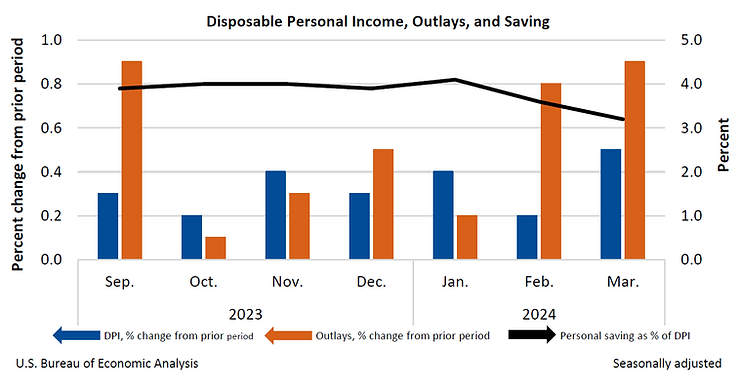
Consumer spending is a key indicator of economic success and a major driver of the economy. It’s a primary determinant of economic performance and can lead to increased production of goods and services, higher GDP, and job creation. Consumer spending continues to climb, especially for lower-income households. Lower-income spending growth continues to be more than higher-income households. Earlier tax refunds tend to inflate those numbers, as people spend their tax return money. Total spending per household rose 1% year-over-year in April, following a rise of .3% rise in March.


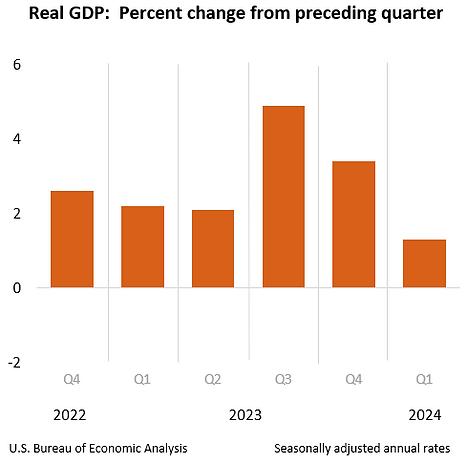
The growth rate of real gross domestic product (GDP) is a key indicator of economic health and activity. As of April 25,2024, the US GDP was $28.28 trillion, which is a 5.49% increase from April of last year. When adjusted for inflation, the GDP increased at an annual rate of 1.6% in the first quarter of 2024, which is a decrease from 3.4% from fourth quarter of 2023. The increase in the first quarter was due to higher consumer spending.


Should You Take an Interest In Your Interest Rate?

Posted by Wendell Brock on Thu, Jun 27, 2024

Should You Take an Interest In Your Interest Rate?

  • Wendell Brock
  • Jun 27, 2024
  • 2 min read

People always ask me where the interest rates are  going. If I knew that, I’d be living on an ivory tower some place making millions. That fact is companies and experts can try and predict, or forecast, where interest rates will go, but there is no way to tell for sure. There are many factors that determine what the interest rate will be including things like Central Bank policy, inflation expectations, national economic conditions, global economic conditions, as well as many other things.


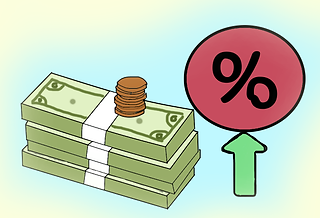
Interest rates are essentially the cost of borrowing money or the rate of  return on investments for lending  money. When you take out a loan you typically pay back more than what you borrowed. That additional amount is the interest. Interest rates are expressed as a percentage of the total amount of borrowed money. These could be fixed rates (meaning they stay the same over the life of the loan) or variable rates (meaning the rate changes based on market conditions). Central banks, like the Federal Reserve, set benchmark interest rates, which influences the rates at which banks lend to each other. Changes in benchmark rates ripple through the economy and affect borrowing and  lending rates for consumers and businesses.


On May 1, 2024, the Federal Reserve made the decision to keep its benchmark rate unchanged. The federal funds rate is the interest rate that banks lend or borrow funds from each other overnight to meet reserve requirements or manage their short-term liquidity needs. When the Fed lowers interest rates, it means that it reduces the target range for the federal funds rate. This latest decision by the Fed is the sixth consecutive in which they have kept its policy rate steady between 5.25% and 5.5%. Rates have not moved since the start of 2024 after eleven rate hikes between 2022 and 2023.


Interest rates can act like a barometer, giving us an idea of how the economy is performing. In an effort to stabilize the economy, the Federal government will adjust the prime interest rate. If the economy is performing well, interest rates will typically be higher, but when there is an economic slowdown, interest rates will come down to stimulate consumer spending and economic growth.


It’s important to understand how interest rates affect your personal financial   economy as well as your community. Interest rates play a crucial role in the financial landscape of our nation and influence everything from the cost of borrowing money to the return on your investments. Whether it’s interest you pay on an auto loan or home mortgage, or interest you earn on your investments, you should always be aware of the interest rates that affect you. Interest rates play a critical role in our lives and are something we should always take an interest in.


120514_WWBrock_1

Wendell W. Brock, MBA, ChFC

Subscribe by Email

Follow Me

Most Popular Posts

Other Sites I Follow, hobbies, fun and info:

gold-vs-silver-1.jpg  Nauvoo Mint brokerage services for precious metals


john Mauldin chair

Note:

Outside Economics is not a registered investment advisory firm (RIA) and does not act as an RIA. Outside Economics does not provide any specific investment advice. Any information obtained from this website or through one of  Outside Economics' representatives should be reviewed by a professional.

Subscribers Note: We do not sell our email list. Period. Thank you for subscribing.

Recent Posts