Outside Economics

How Well Do You Know Your 401(k)?

Posted by Wendell Brock on Sat, Feb 27, 2021

How Well Do You Know Your 401(k)?

  • Wendell Brock
  • Feb 27, 2021
  • 3 min read


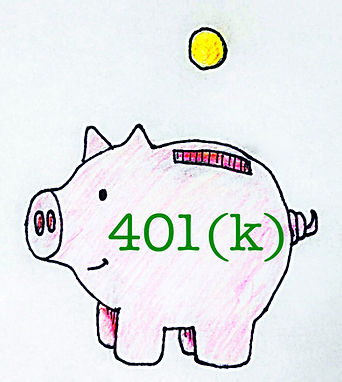
“401(k)” is one of those terms that frequently gets tossed around in regular finance or work conversations, but how well do you understand it?


A 401(k) is an employer-sponsored savings account with perks. Money is automatically deducted from your paycheck, goes into an account, and is invested on your behalf. Once there, you have the responsibility to invest it into different investments, most often mutual funds, which may hold stocks, bonds, or REITS (Real Estate Investment Trusts).


Because money is withheld from your paycheck, and deposited regularly into your account, you are using an investment method called dollar cost averaging. This occurs when every deposit purchases shares at different prices, because of the market fluctuations. Some deposits are made when the market is low, and others are made when the market is higher, giving an average cost for all shares owned.


Early on in your career it may be a good idea to invest in some higher risk/return securities like stocks. This gives you time to ride the fluctuations of the stock market. Later on in your career you might want to shift those investments to more stable choices like bonds.


The name 401(k) comes from a section of the Internal Revenue Code that authorizes profit-sharing plans. This term is now used to describe these employer-sponsored retirement plans that specifically use this code.


There are two types of 401(k)s. There is the traditional 401(k) that takes money from your paycheck PRE TAX. This means that your money that you invest in your account is not taxed at the time it is earned, and your investments grow tax deferred.


The second type is a Roth 401(k). This takes money from your paycheck after it has been taxed.


These differences really come into play when you begin taking money out of your 401(k) during retirement. If you have gone with the traditional, the contributions and earnings will be taxed when they are withdrawn. With a Roth 401(k) your withdrawals will not be taxed, because you already paid taxes on that money before it was put into the account.


Some employers offer to match your contributions to a certain percentage. If this is an option take it. It’s a good idea to, at the very least, take advantage of matching benefits. In these situations the employer is taking money from corporate profits and assisting you in planning for your retirement. (This is why 401(k) plans are often referred to as profit sharing plans.)


There are two key ages that come into play with a 401(k) - 59 ½ and 72. If you take money out of your 401(k) before the age of 59 ½ you will get hit with a 10% early withdrawal penalty tax.


At 72 you must begin taking Required Minimum Distributions (RMDs). The RMD age was increased from age 701/2 to 72 last year as part of the COVID funding laws.


Additionally, you can continue to contribute to your 401(k) for as long as you are working. If you are still working at the age of 72, as a participant you do not have to take RMDs from that 401(k).


If your employer offers a 401(k) it may be a good idea to jump on board. When you reach retirement, all that will be there is what you have sent on ahead. Save and invest lots! At retirement, you are replacing your physical work with your dollars working for you, and you want as many dollars working for you as possible. That is how you Secure Tomorrow!


“Good investing is simple: buy a good asset at a good price and hold it for a good long time.”

-Adrian Day

The Maxims of Wall Street by Mark Skousen



What are Exchange Traded Funds (EFTs)?

Posted by Wendell Brock on Sat, Feb 20, 2021

What are Exchange Traded Funds (EFTs)?

  • Wendell Brock
  • Feb 20, 2021
  • 2 min read

Have you ever had a craving for pizza, but couldn’t decide on which kind to get? What if you could only get one? Wouldn’t it be great if you could have a couple slices of lots of different flavors, or different types of crust, maybe even a bread stick or two all in one pizza? This is pretty much how an exchange traded fund or ETF works. Here are some basics about ETFs:


An ETF compiles lots of different stocks into one group or basket- kind of like a pizza made from lots of different styles, toppings, and flavors, but sold as one pizza.


Exchange Traded Funds get their name because they are traded on an exchange just like a stock. This means they can be bought and sold throughout the day, unlike their cousin the mutual fund, which we learned about last week.

At first glance ETFs can look a lot like mutual funds; they are both collections of stocks, bonds, or securities, but there are a few key differences.


  • Mutual funds are actively managed so that assets within the fund are bought and sold to gain the most profit. ETFs are more passively managed and typically track or mirror specific indexes.


  • Mutual funds typically have a minimum investment requirement, whereas ETFs typically do not have a minimum. In some cases may even be purchased in fractional shares


  • ETFs are more tax efficient than mutual funds.


  • ETFs allow you to keep more of the profits compared to mutual funds because they typically have a lower management expense.


ETFs can hold hundreds of different stocks across myriad industries, or it can be focused on a single sector or industry. This allows the investor to create a balanced portfolio between risk and potential returns.


If we go back to our pizza analogy, we could say that you are an adventurous eater and like trying new things. It would be nice to be able to order just one slice with crazy flavors, rather than the whole pizza, and still get some tried and true flavors, because what if you end up not liking the new one? With an ETF, you can have a lot of diversification, meaning if one company’s stock (or slice) doesn't do well, there's plenty of other really great tasting stocks to make up the difference. This means you don’t feel the loss as greatly as you would if the whole pizza had been made up of the new adventurous but not-so-great-flavor.


There are some negatives to ETFs. At times they can be a little more complex than traditional mutual funds, this can be overcome with the help of a knowledgeable advisor. Another downside is they pay lower dividend yields-because ETFs track a broader market the yield is averaged out and will end up being slightly lower. There is no one perfect type of investment, and the bottom line always comes down to knowing and understanding what you're investing in, both the good and the bad.


"An investment in knowledge pays the best interest."

-- Benjamin Franklin


Do You Really Want a Mutual Fund?

Posted by Wendell Brock on Sat, Feb 13, 2021

Do You Really Want a Mutual Fund?

  • Wendell Brock
  • Feb 13, 2021
  • 2 min read


A mutual fund is both an investment as well as a company. It allows you to pool your money with other investors which is then used to invest in a portfolio of different things like stocks, bonds, money market instruments, properties, etc.


Mutual funds are operated by money managers who decide how to invest the money in an attempt to produce growth or income for the fund’s investors. A mutual fund’s portfolio is structured and maintained to match a particular investment strategy. In other words, the money managers pick investments that they believe will meet the stated goal of the fund.


When you buy into a mutual fund you are actually buying a portion of the portfolio’s value. The value of the mutual fund doesn’t fluctuate during the day like an individual stock, rather its value is settled at the end of the trading day.


The positives:

  • Mutual funds are an easy way for beginner investors to get started.

  • Mutual funds give you diversification allowing you to invest in many different things. The more diverse the fund the fewer risks you take on.

  • Mutual funds are managed by a professional that makes investment decisions based on the goals of the fund. Typically you don’t have to babysit your investment.

  • Mutual funds allow you to reinvest the interest, dividends, and capital gains into additional mutual fund shares.


The negatives:

  • Mutual funds may have high fees. Be aware of the expense ratio before buying.

  • Mutual fund prices are only calculated at the end of the day, compared to stock, which fluctuates throughout the day.

  • You can only sell your shares at the end of the day after the market closes. This limits your ability to react to the market swings, up or down.

  • You don’t have control over the portfolio, that lies with the fund manager.

  • Mutual funds can sell profitable investments to create capital gain, even if the fund has performed poorly, which means you could lose money on an investment, but still pay taxes on it.


Overall, a mutual fund creates an opportunity for new and experienced investors to diversify their investment dollars in one place, helping you as an investor control some investment risks. Today, mutual funds are used mostly in 401(k) type retirement plans. Very few investors still use mutual funds outside of retirement plans.


Next week I will explain Exchange Traded Funds, (ETF’s). Informal Survey: What is your favorite Mutual Fund? Post in the comments!


“Better to buy part of a company than the whole thing.” - Warren Buffet


You're paying how much?!

Posted by Wendell Brock on Sat, Feb 06, 2021

You're paying how much?!

  • Wendell Brock
  • Feb 6, 2021
  • 2 min read

People often want to know how to calculate their living expenses to create a workable budget. There are plenty of formulas out there for allocating income. There are many factors that go into your cost of living that need to be taken into account - things like where you live and how much you make, or if you live on a variable income (commission) or a fixed income (salary or hourly type wages).


Often, what ‘you make’ is far different from the paycheck brought home. Taxes can eat a large amount of those wages, as well as other benefit deductions, health care, retirement, etc.


Budgeting is a personal process, unique to you and your circumstances, it is very emotionally driven. What is important to one family, may not be to another family. Considering identical income, neighborhood, etc. no one budget or plan will be identical.


Often the fewer categories to keep track of the easier it will be to follow through and keep within a budget. At times drilling down into a broad category to see the actual details will be helpful when changes need to be made.


For this reason, use a budget formula as a springboard or template to get started. Once you have an understanding of your expenses you can tweak the numbers to fit your personal needs and goals.

A budget formula can be as simple as 50/30/20


  • 50% of your income going to all general or basic needs. This is easier than itemizing your separate bills and expenses. These are things like mortgage, utilities, groceries, transportation, medical, etc.

  • 30% of your income going to creature comforts and fun things. These would be things like entertainment, eating out, hobbies, gym memberships, etc.

  • 20% of your income going towards savings and an emergency fund.


You can use this as a guideline, ultimately you should aim to to live on much less than you take home.


If you really want to create financial security, switch the last two numbers, the 30% and the 20%. Save 30% and spend the 20% on the fun things. With this formula, your savings and investing will skyrocket. Your financial security will truly materialize much faster.


You will be blessed with the results of financial self discipline, which in today’s world, with so many places to spend money, you may create real wealth!


Once you map out where your money is going you can make decisions that allow you to save more. Saving should always be a priority - “pay yourself first” has become the leading advice for sound financial planning. Remember that financial success is directly related to the effort you put into it.


“Do not save what is left after spending; instead spend what is left after saving.”

- Warren Buffet


120514_WWBrock_1

Wendell W. Brock, MBA, ChFC

Subscribe by Email

Follow Me

Most Popular Posts

Other Sites I Follow, hobbies, fun and info:

gold-vs-silver-1.jpg  Nauvoo Mint brokerage services for precious metals


john Mauldin chair

Note:

Outside Economics is not a registered investment advisory firm (RIA) and does not act as an RIA. Outside Economics does not provide any specific investment advice. Any information obtained from this website or through one of  Outside Economics' representatives should be reviewed by a professional.

Subscribers Note: We do not sell our email list. Period. Thank you for subscribing.

Recent Posts