Outside Economics

Protect What Matters Most

Posted by Wendell Brock on Tue, Oct 21, 2025

Protect What Matters Most

  • Wendell Brock
  • Oct 21, 2025
  • 2 min read

You probably don’t think about it every day, but everyone has an estate—everything you own, from your home and savings to your favorite collectibles. The question is: what happens to all of it when you’re no longer around? That’s where estate planning comes in. Think of it as a way to ensure your wishes are honored and your loved ones are cared for, without leaving them to navigate a messy legal maze.


Estate planning isn’t just about a will. It’s a set of  documents that guide what happens if you can’t manage your finances or healthcare—or when you pass away. At a minimum, a solid plan includes a will, durable power of attorney, healthcare power of attorney, living will, and HIPAA authorization. Many people also use a revocable living trust to simplify things further. A will lays out your wishes and names an executor and guardians for minor children, but it doesn’t avoid probate—the public, court-supervised process that can slow asset    distribution and add stress to your family.


A durable power of attorney lets someone you trust handle financial matters if you’re incapacitated. Similarly, a healthcare power of attorney allows someone to make medical decisions on your behalf. A living will spells out your healthcare preferences, including end-of-life wishes, while a HIPAA form gives caregivers access to your medical information so they can make informed decisions.


For those wanting privacy and to avoid probate, a revocable living trust is a game-changer. Assets in a trust pass directly to beneficiaries without court involvement, and trusts can protect heirs from unnecessary stress or financial mismanagement. Families with larger estates or complex situations might also use irrevocable trusts, spousal lifetime access trusts (SLATs), or special-needs trusts to reduce taxes, protect assets, and manage distributions carefully.


Even if your estate is modest, planning matters. Joint   accounts, payable-on-death accounts, small estate affidavits, and annual gifting strategies can simplify transfers and reduce taxes. For anyone with minor children, having a plan is critical—without it, the state decides who cares for them and how your assets are  distributed.


The bottom line? Estate planning is about more than money—it’s about protecting loved ones and making your wishes clear. Regularly reviewing and updating your plan ensures it keeps up with changes in your life, finances, and the law. A well-crafted estate plan can prevent family disagreements, reduce stress, and provide peace of mind knowing everything is taken care of exactly the way you want.


Whether your estate is big or small, now is the time to make your plan. Work with an estate planning attorney to navigate legal and tax considerations and give yourself—and your family—the clarity and security they deserve.

Obviously these explanations are very general—each document has its own purpose and details. The key is getting this part of your financial plan checked off. We’re happy to walk through the documents and help you gather the information an attorney will need to draft them. Reach out and we’ll set up a time to make it happen.


The Most Common Question

Posted by Wendell Brock on Tue, Oct 14, 2025

The Most Common Question

  • Wendell Brock
  • Oct 14, 2025
  • 2 min read

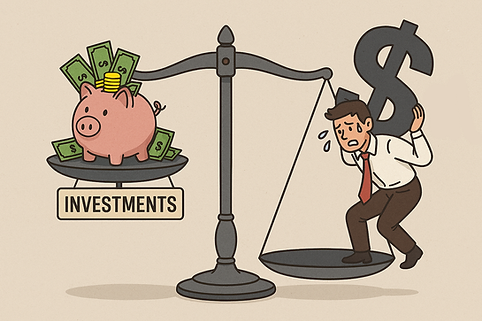
When it comes to personal finance, one of the most common questions people ask is whether they should focus on paying off debt first or start investing right away. It can be a tricky decision, and the right answer isn’t the same for everyone. Your choice depends on several factors, including interest rates, financial goals, and even your personal comfort level with carrying debt.

Many people dream of building wealth through investing, but they feel weighed down by the burden of existing loans. Common financial challenges often include not knowing where to start with investments, struggling to create a realistic retirement plan, failing to balance immediate expenses with future goals, and facing tax season without professional guidance. Unfortunately, ignoring these challenges doesn’t make them disappear — they tend to snowball, creating more stress and insecurity over time.


A helpful guideline often referred to as the “rule of 6%” can provide clarity. If your debt carries an interest rate of 6% or more, it generally makes sense to pay it off before investing extra money toward retirement. This rule assumes that you’ve already built an emergency fund. Why 6%? Because balanced investment portfolios have historically returned around 6–7% annually. If your debt is costing you more than that, the math says debt repayment comes first.


Not all debt is created equal. For example, paying down credit card balances with rates between 16–24% should be a top priority since the cost compounds quickly. On the other hand, federal student loans at around 5% or a mortgage at 3.5% may not demand aggressive repayment if you could potentially earn more by investing. In those cases, investing while maintaining minimum payments may provide a better long-term outcome.

Still, math isn’t everything. Feelings matter, too. Debt can be emotionally exhausting, and many people prefer the peace of mind that comes with becoming debt-free, even if the numbers suggest investing would generate higher returns. If debt keeps you awake at night, there’s nothing wrong with prioritizing repayment. On the other hand, if you’re comfortable carrying low-interest “good debt,” investing alongside repayment can help your money grow.


There are also foundational steps to put in place before making the debt vs. invest decision. Experts generally recommend establishing an emergency fund of three to six months’ expenses to avoid falling back into debt when unexpected costs arise. Capturing an employer 401(k) match is another must, since it’s essentially free money. With these building blocks in place, you can then focus on choosing between debt payoff and investing.


The general rule of thumb is: High-interest debt (7–8% or more): Pay it off first; low-interest debt (under 5%): Invest while keeping up with minimums. Middle-range debt (5–7%):  The decision depends on your goals and tolerance for risk.


There’s no one-size-fits-all answer. The decision comes down to both math and mindset — comparing interest rates with expected investment returns, while considering your personal comfort with debt.


Life Insurance Awareness Month

Posted by Wendell Brock on Wed, Oct 01, 2025

Life Insurance Awareness Month

  • Wendell Brock
  • Oct 1, 2025
  • 2 min read

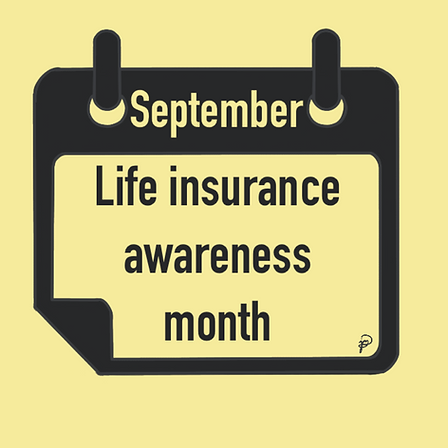
Every September, we recognize Life Insurance Awareness Month, an important campaign dedicated to increasing public understanding of life insurance and urging people to take action and financially protect their loved ones. Despite broad acknowledgment of its       importance, millions of Americans remain uninsured or underinsured. Life moves fast, and between work, family, and day-to-day responsibilities, it’s easy to push financial planning to the back burner. But life insurance is one of those things that the peace and security enjoyed far out weights the hassle factor of getting a policy.

You might be surprised to learn that while about half of Americans own life insurance, more than 100 million adults either don’t have any coverage or feel they don’t have enough. So why do so many families go without? A big reason is cost. Many people assume life insurance is too expensive. That begs the question, expensive compared to what? A quick evaluation of personal spending can often put things in perspective.


Another hurdle is confusion. Between terms like “whole life,” “term life,” and “universal life,” and many others, the language can feel intimidating. In fact, studies show that less than a quarter of people feel confident they fully understand their options. Without someone to break it down, it’s easy to keep putting the decision off. This is where procrastination can be extremely expensive.


And of course, nobody really likes to think about what would happen if they weren’t around anymore, it’s     human nature to avoid tough topics. After all, the sun will come up tomorrow, right?


Life insurance is really about love and responsibility. It’s a safety net for the people who count on you most. If something were to happen to you, your family wouldn’t have to struggle to cover the mortgage, keep up with bills, or figure out how to pay for education, let alone pay for the funeral expenses. Instead, life insurance gives them financial breathing room so they can grieve and heal without the added stress of money worries.


Beyond the practical side, it brings enormous emotional relief knowing your family won’t be left in a difficult spot; think of it as a gift of stability.


While many people see life insurance as just a “what if” plan, it actually comes with some surprising benefits.  Certain policies build cash value over time, which you can borrow against and use for future goals. Policies also typically provide benefits tax-free to your loved ones,  giving them the full amount when they need it most.


Life Insurance Awareness Month is more than a campaign—it’s a nudge to pause, reflect, and make sure your family is protected. Whether you’re starting a family, buying a home, or just wanting to be proactive about the future, now is the perfect time to explore your options. Even a small policy can make a big difference.


At the end of the day, life insurance isn’t just about money. It’s about love, care, and making sure that, no matter what, your family is taken care of. And that peace of mind is priceless. So, go forward and Secure Tomorrow.


The Hidden Wealth In Life Insurance

Posted by Wendell Brock on Wed, Oct 01, 2025

The Hidden Wealth In Life Insurance

  • Wendell Brock
  • Oct 1, 2025
  • 2 min read

In the world of financial strategy, few headlines raise eyebrows quite like this one: Paul Atkins and his wife own 54 life insurance policies. At first glance, the number sounds excessive, but behind it lies a sophisticated case study in estate planning, tax efficiency, and generational wealth management.

When nominated for Chairman of the SEC, Atkins disclosed a net worth of about $327 million. Of that, $6 million is allocated across 54 life insurance policies. While most families own one or two policies at most, Atkins’s portfolio reflects an intentional approach to   leveraging insurance as an advanced wealth-building and preservation tool.


Individuals face strict contribution limits on retirement accounts like IRAs and 401(k)s. Permanent life insurance, especially whole life and indexed universal life, offers an alternative. These policies grow a tax-deferred cash value, which can be accessed tax-free through loans or withdrawals, while the death benefit passes to heirs income tax-free.

For Atkins, life insurance isn’t about basic income replacement, it’s a private, tax-efficient asset class that compounds quietly, sidestepping many restrictions of other financial tools.

Families also face the challenge of efficiently passing their estate to the next generation, minimizing income and estate taxes, and administrative costs upon death. Such policies can provide immediate liquidity, helping heirs avoid selling illiquid holdings, such as real estate or closely held businesses, during market downturns.


Atkins’s policies may be held individually, within trusts, or by separate entities, each serving a distinct purpose. Some could be earmarked for specific heirs, while others might fund charitable trusts or philanthropic commitments. In each case, the structure is efficiently designed to preserve and transfer wealth economically.


Owning dozens of policies also brings risk diversification, not only across insurance carriers, it also provides a more balanced use of financial resources. The cash  value buildup in policies tends to be a high-quality use of cash with reasonable dividends paid in the policies. This allows for potential higher risk assets on the other side of the investment spectrum. It’s a similar principle that drives investors to diversify across stocks, bonds, etc.

It’s also possible that not all of these policies insure Atkins himself. Some are likely on his wife and children.


With Atkins back in the public spotlight, this level of insurance ownership shines a light on how Americans can use life insurance in ways most households never considered.

Whether managing hundreds of millions or building a modest nest egg, Atkins’s approach underscores that life insurance can do far more than simply replace income. It can: grow wealth tax-deferred, provide income tax free estate liquidity, and diversify financial risk, transfer assets tax-free.


Fifty-four policies are beyond the needs of the average family, but the thinking behind them offers valuable lessons. For those seeking to elevate their financial  planning, it’s a compelling case for looking into life insurance not just as protection, but as a strategic part of any financial plan.


120514_WWBrock_1

Wendell W. Brock, MBA, ChFC

Subscribe by Email

Follow Me

Most Popular Posts

Other Sites I Follow, hobbies, fun and info:

gold-vs-silver-1.jpg  Nauvoo Mint brokerage services for precious metals


john Mauldin chair

Note:

Outside Economics is not a registered investment advisory firm (RIA) and does not act as an RIA. Outside Economics does not provide any specific investment advice. Any information obtained from this website or through one of  Outside Economics' representatives should be reviewed by a professional.

Subscribers Note: We do not sell our email list. Period. Thank you for subscribing.

Recent Posts