
Outside Economics

Ugh, Taxes!

Posted by Wendell Brock on Fri, Jul 23, 2021

Ugh, Taxes!

  • Wendell Brock
  • Jul 23, 2021
  • 2 min read

Nobody likes to pay taxes. For a lot of us when taxes are mentioned we picture something like the rotten Sheriff of Nottingham collecting taxes from the poor people and whistling happily as he does. We may not have some grabby tax collector knocking down our doors, but the ease of modern online filing and auto withholdings doesn’t remove the sting out of paying taxes. In fact, the burden of paying taxes has been felt since at least 3000 B.C. Taxes have been a part of economies from the beginning.


In 1913 the sixteenth amendment was passed in the United States allowing the U.S. government the power to tax our income. That being said, income taxes are a huge part of our current economy. Our tax dollars fund things like government operations, public services, public spaces and roads, the military, providing assistance for low-income families, and help with national disasters.


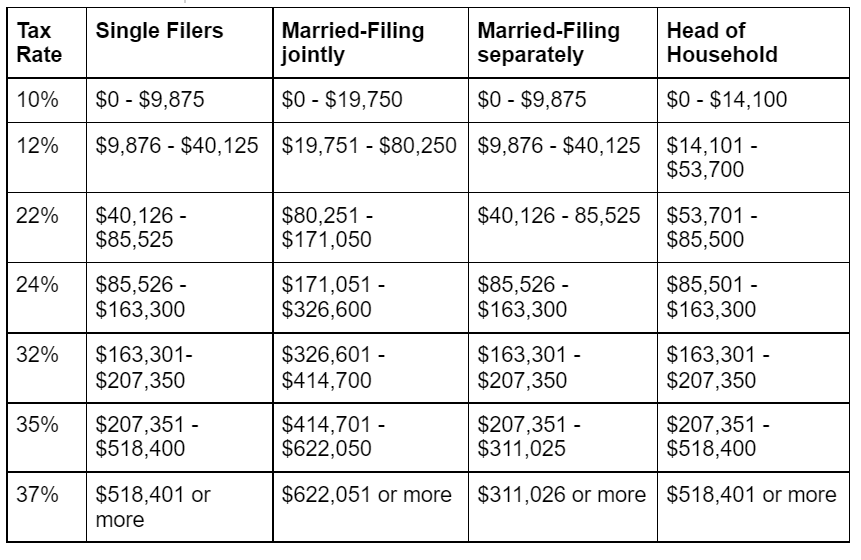
Income taxes in the United States are determined by how much an individual earns, the more you make the higher percentage of taxes you will pay. This encompasses all of an individual's earnings including capital gains. For federal income taxes, the percentage is based on which “bracket” you fall into. This also changes based on how you are filing- single, married: filing separately, married: filing jointly, and head of household.


2020 Tax Brackets

By law, taxpayers must file an annual tax return to make sure all tax obligations have been met. Most employers withhold the appropriate taxes from your paycheck and send them off to their proper places- either the State or Federal government. When you first start with an employer you fill out a W-4 form. This form determines how much of your earnings are withheld. However, this amount is not always perfectly accurate. You may owe more or less. When you file your tax return you get an accurate sum of your income and the taxes due. Often tax liability can be reduced by claiming certain tax deductions. This could result in the government owing you and sending you a refund - this is usually the part people do like.


There are three ways of filing your taxes. You can mail in a form 1040, you can file electronically via tax software. Many people prefer to hire a tax professional that knows the tax laws and can find places to reduce tax obligation.


Working with a financial planner can help you make sense of not just your taxes, but all other aspects of your finances. If you have questions send them our way - questions@yieldfa.com


“There is nothing sinister in so arranging one’s affairs as to keep taxes as low as possible.”

-Judge Learned Hand pg. 134 The Maxims of Wall Street by Mark Skousen


45 views
0 comments

Got Insurance?

Posted by Wendell Brock on Fri, Jul 16, 2021

Got Insurance?

  • Wendell Brock
  • Jul 16, 2021
  • 2 min read

Previously, we discussed risk management and how insurance is a tool we can use to minimize our financial risks. When thinking about your financial plan insurance might not be the first thing you think of, but it is an important element.


Insurance is a contract, represented by a policy, that safeguards you against loss. By collecting small amounts of money (in the form of premiums) from all their policyholders each month, an insurance company creates a large pool of money that can cover the steep costs associated with covered losses. Insurance companies analyze the risk potentials by using mathematics, statistics, and other financial theories. This allows them to price their policies based on how likely it is people will make a claim.


Like many things in the financial world, there are many details and options connected with insurance, so it can feel overwhelming. There are multiple types of insurance ranging from the usual home and auto to the less common wedding or alien abduction insurance. Essentially, if it has value you can find an insurance policy to cover it.


You obviously don’t need to have every type of insurance that’s available, but it is important to have appropriate insurance coverage. If you own a car you will need to have auto insurance, and if you own a home or are renting you should definitely have either homeowner’s or renter’s insurance. We’ve written about life insurance before on our blog and how important it is to cover your family in case something happens to you.


There is also umbrella insurance, which covers personal liability beyond what a homeowner or auto policy would cover. It's designed to cover any injury or damage you may have caused to someone else or something outside the coverage of your other insurance coverage. Umbrella policies create another level of risk management. If you are a part of anything that increases your risk of liability, umbrella coverage may be a smart choice.


We all know that life can be unpredictable. Would anyone have guessed how these last couple of years were going to turn out? Life will always throw the unpredictable at you, but if you are prepared and plan for some of those uncertainties you will have a much better chance of weathering financial storms and protecting your assets. Having the right insurance plan in place can help make sure you don’t drain your emergency or saving funds when life gets stormy.


What financial question keeps you up at night? Reach out at questions@yieldfa.com.


“I don’t believe in taking foolish chances, but nothing can be accomplished without taking any chance at all.”

-Charles Lindbergh p.49 The Maxims of Wall Street by Mark Skousen



What Is Risk Managment?

Posted by Wendell Brock on Fri, Jul 09, 2021

What Is Risk Managment?

  • Wendell Brock
  • Jul 9, 2021
  • 2 min read

Life is inherently risky. We run the risk of something going wrong daily. Most of the time we can avoid risks by the good choices we make or by planning ahead. When it comes to our finances we can apply the same thinking. Many financial risks can be avoided by doing research and making wise decisions. However, some unpredictable things fall outside of our control. This is where risk management really comes into play. There is no way to eliminate all risks, but we can minimize and even circumvent many risks that could affect our financial security.


It’s all about your choices:


If you’re the kind of person that likes to take a little more risk in your life you may feel comfortable taking a walk during a thunderstorm, acknowledging that there is a chance of getting struck by lightning. But if you tend to avoid the riskier paths, you would probably stay inside during the storm where you know you will be safe. This same principle applies to our finances. There are some things we know will carry more risk than others, and depending on how well we tolerate risk we can either embrace that risk or avoid it. (You can read more about risk tolerance here).


There are different ways that we can approach risk:


When we assume risk we are not doing anything to minimize a potential loss. For example, if you don’t have car insurance and you get into a wreck, you will have to cover the full cost of damages yourself.


Sometimes we can share risk (also known as risk distribution) so that we don’t carry the full weight of potential financial burdens. If something bad happens, sharing the risk helps spread the effects and reduces the impact you may feel. This works well when you have a financial partner backing you.


We can transfer risk to others- like insurance companies- and they assume the responsibility (as long as you are paying your premiums). Insurance companies use the Law of Large Numbers and mathematical and statistical formulas (actuarial science) to assess risks they are taking on. We’ll talk more about insurance in our next article.


If we make efforts to avoid risks we can circumvent some problems altogether. Avoiding risk means you steer clear of choices that could lead you to potential problems. This can be a great way to prevent large losses, however, while avoiding riskier possibilities you might also miss out on other options and opportunities.


The whole idea behind risk management is to limit potential damage and protect your assets. If you have questions about risk management or any other financial concerns you can send them to qestions@yieldfa.com and we’ll write up a response!


“Think risk first, then reward.”

-Anthony M. Gallea

Pg.51 The Maxims of Wall Street by Mark Skousen



120514_WWBrock_1

Wendell W. Brock, MBA, ChFC

Subscribe by Email

Follow Me

Most Popular Posts

Other Sites I Follow, hobbies, fun and info:

gold-vs-silver-1.jpg  Nauvoo Mint brokerage services for precious metals


john Mauldin chair

Note:

Outside Economics is not a registered investment advisory firm (RIA) and does not act as an RIA. Outside Economics does not provide any specific investment advice. Any information obtained from this website or through one of  Outside Economics' representatives should be reviewed by a professional.

Subscribers Note: We do not sell our email list. Period. Thank you for subscribing.

Recent Posts