Outside Economics

How To Keep the Grinch Out Of Your Finances

Posted by Wendell Brock on Mon, Dec 16, 2024

How To Keep the Grinch Out Of Your Finances

  • Wendell Brock
  • Dec 16, 2024
  • 2 min read

Updated: Dec 9, 2025

Every year Christmas rolls around brining carols, presents, joy…and stress. Deep down, inside each of us, lies the potential for a big green hairy Grinch to emerge. The Christmas season is a time for family and celebration, but for many, it can also be a time of  financial frenzy and stress that feels more akin to a Grinch-like robbery than a joyful occasion. So, how can you make sure that the Grinch doesn’t steal your hard-earned money and throw your holiday budget into chaos? Here are a few tips to keep your finances and your holiday joy secure. 
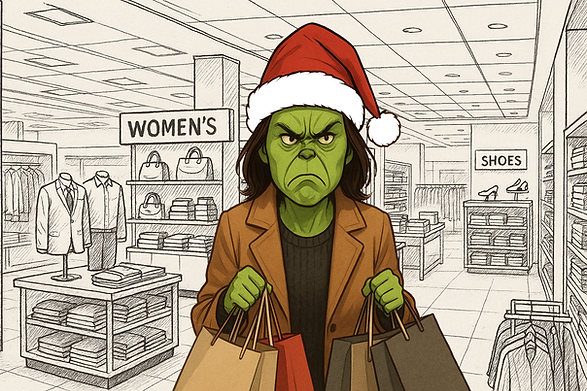
 

Create a realistic budget, and STICK TO IT. Nothing   triggers a grumpy Grinch more than having your budget fly off the rails. However, the first step to keeping that grumbly Grinch at bay is to have a budget in place. Start by reviewing your finances and determine how much you can comfortably spend on holiday expenses, including gifts, decorations, travel costs, meals, parties, or any other holiday-related expense. Prioritize the essentials and account for all the little extras that always come up. 


The Grinch in us loves when we wait until the last minute to buy gifts. That’s when we tend to overspend and stress ourselves out. Planning your shopping in advance gives you time to research sales, compare prices, and avoid the temptation of overpriced last-minute sales gimmicks. Try making a gift list for everyone you need to buy gifts for and budget for each person. A tip for the coming year: put money aside throughout the year and look for gifts all year long, especially during holiday sales. Planning ahead allows you to put more thought into the gifts you give, making them more meaningful for you and the recipient. 


Don’t be afraid to DIY some of your gifts. Handmade crafts, baked goods, photo albums, and similar things make wonderful gifts that will be cherished and can be a lot more budget friendly than some expensive store-bought items. 


Limit how much you put on credit cards. Remember that credit cards are debt, a liability, and you need to be mindful of what you’re willing to take on and increase your debt. Nothing brings out the Grinch like lots of credit card debt. Credit cards make purchases quick and easy. The easiness of credit cards can also make it easy to lose track of how much you’re   spending. If you feel the need to use credit cards for your Christmas spending, set limits and track your spending closely. Then make sure you pay it off as soon as possible. 


Do not use emergency funds for Christmas. Whatever money you have put aside for a rainy day, do not touch it; it has its own purpose and it’s not Christmas. Instead, create a different bucket for Christmas saving and/or other holiday spending. No justification is good enough to use emergency funds for holiday spending. 


Remember, you’re not trying to buy happiness or Christmas cheer. The best way to enjoy the holiday is by creating memories, not debt. Focus on the things that matter to you and your family. Make sure the Grinch doesn’t steal your hard-earned money, your peace of mind, or the joy of the season. 



What’s Your Plan For Next Year?

Posted by Wendell Brock on Fri, Dec 13, 2024

What’s Your Plan For Next Year?

  • Wendell Brock
  • Dec 13, 2024
  • 3 min read

The end of the year is fast approaching, and the new year is knocking at the door. As we prepare for the coming year it’s easy to get caught up in the excitement of a fresh start or new resolutions, but one of the most powerful things you can do for yourself is plan ahead for your finances. Getting your finances in order isn’t about being perfect; it’s about creating a roadmap that helps you feel more in control, less stress, and better prepared for whatever the year may bring. Remember to review this roadmap-budget at least monthly! 

Here are some monthly ideas on how you can maintain financial control. 


January: Make a plan. Decide which things have the highest priority and make your own monthly to-do list based on your needs. Take this month to assess your personal needs and plan your monthly check list accordingly. This would be a good time to draft a budget, prioritize, and look at potential places to cut back. 


February: Prepare for tax time. Gather your needed documents and get organized. If you’re due a tax refund, make plans to invest at least a portion of it and set aside another part for any specific needs you may have. (Don’t just spend it all on fun stuff). 


March: Start your estate plan. If you already have one in place, make sure it’s up to date. If you’re new to estate planning and don’t know where to start, schedule an appointment with an estate attorney. 


April: Do some spring cleaning, both in your home and your finances. Clear out old unneeded documents and get things organized. If home repairs are needed, this could be a good time to budget and focus on those. (This could also be a good area to spend your tax return). 


May: Check your credit score. You can access one free report from each of the major credit bureaus each year. Request yours and resolve any issues you find. Assess any debts and make a plan to pay them down and eliminate them. 


June: Give yourself a mid-year check-up. Go over what you’ve done and make sure you have completed tasks and goals. Have you been reviewing your budget monthly? Check in on your investments; do they still align with your risk tolerance? Analyze what you have left to do regarding your finances and adjust wherever needed. 


July: Evaluate your 401k and other retirement savings accounts. What better way to celebrate Independence Day than by securing your financial independence in retirement? 


August: Focus on education. Take time to learn something or dive deeper into a financial topic that interests you. You could open a 529 account for your child or grandchild. Help your children succeed financially and teach them what you have learned. 


September is Life Insurance Awareness Month. What better time to review your coverage levels for your life insurance, as well as your health, disability, liability, auto, and property insurance. Look into any discounts you might qualify for. 


October: Begin some year-end tasks. Don’t wait until the last minute; start getting your tax documents in order before the end of the year. This is also a great time to assess your holiday budget and start making lists for your holiday shopping. 


November: This is a great time to be grateful and give back. 


December: Take this month to boost your emergency fund and find ways to add to it throughout the coming years. Work towards having at least 6 months’ worth of living expenses put away. 


  You made it to the end of the year, now make sure you’re all set up for the new year! Look at the progress you’ve made and make plans to keep your momentum. Happy New Year! 


Photo: Robin Higgins


Black Friday Shopping

Posted by Wendell Brock on Wed, Dec 11, 2024

Black Friday Shopping

  • Wendell Brock
  • Dec 11, 2024
  • 2 min read

We are nearing the long-awaited event where people all over the country will line up in the predawn hours to get the best deal of the year on socks…well at least they used to. Black Friday now starts on Thanksgiving and overflows into Cyber Monday. Businesses nationwide are gearing up for the peak sales of the year,  offering “unheard of” deals as well as other ploys to get people in the doors or to their websites.


Often seen as the kick-off to holiday shopping, Black Friday is an important day for many businesses across America, including local and small businesses. Like the big-box counterpart, small businesses see a surge in sales as consumers shop for unique gifts for the holidays. This high-profile weekend can bring in new shoppers,   providing expanded visibility and attracting new customers. However, on a small business level, Black Friday is not always all it’s cracked up to be. In some ways, it can have a negative impact.


While Black Friday definitely gets more people in the door and perusing websites, small businesses may struggle to compete with the massive discounts larger retailers can afford to offer. By discounting their products, small businesses cut into their profits, shrinking their profit margins which may even end in a loss, this greatly affects their financial health. Many people approach their holiday shopping expecting to find the best deals. Unfortunately, small businesses typically can’t keep pace with the heavy discounts offered by larger retailers.


What small businesses may lack in “killer deals” they make up for in their ability to offer unique items and often superior customer service. Many small businesses focus on        creating a specific “shopper experience” that is more desirable than shopping Big Box stores.


Consider shopping on Small Business Saturday. This day was initiated by American Express in 2010 as a way to help promote small businesses and boost their sales going into the holiday shopping season. This day emphasizes the importance of small businesses and the role they play in our economy. By choosing small and local over the larger retailers you have the opportunity to discover unique products as well as support your local economy.


Consumer Spending & Industrial Production

Posted by Wendell Brock on Wed, Dec 11, 2024

Consumer Spending & Industrial Production

  • Wendell Brock
  • Dec 11, 2024
  • 1 min read

Consumer Spending

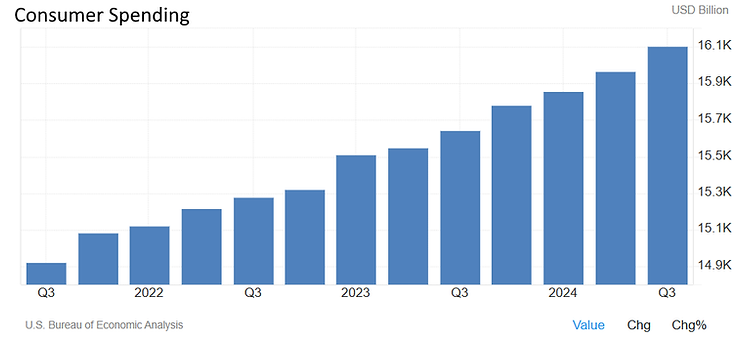
According to the latest data form the U.S. Bureau of Economic Analysis, consumer spending in the United States reached an all-time high, increasing from $15,967.30 billion in the second quarter of 2024 to $16,106.40 billion in the third quarter of 2024. Personal savings as a percentage of disposable income was 4.6%.


Industrial Production

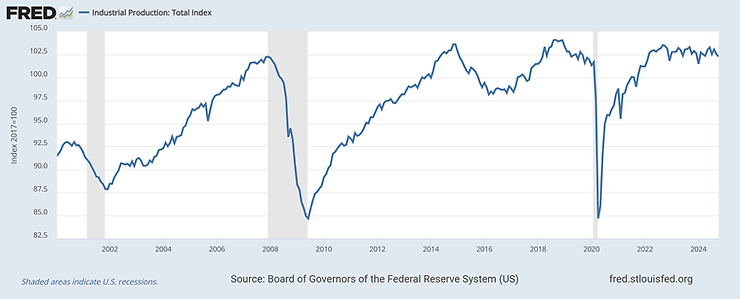
Industrial production refers to the output of industrial establishments and covers sectors such as mining, manufacturing, electricity, air-conditioning, etc. The calculation for productivity is output by a company divided by the units used to generate that output. The latest report showed industrial production in the US dropped .3% from the previous month, which was more than the projected .2% decrease.


GDP & Gross Output

Posted by Wendell Brock on Wed, Dec 11, 2024

GDP & Gross Output

  • Wendell Brock
  • Dec 11, 2024
  • 2 min read

We are nearing the long-awaited event where people all over the country will line up in the predawn hours to get the best deal of the year on socks…well at least they used to. Black Friday now starts on Thanksgiving and overflows into Cyber Monday. Businesses nationwide are gearing up for the peak sales of the year,  offering “unheard of” deals as well as other ploys to get    people in the doors or to their websites.


Often seen as the kick-off to holiday shopping, Black Friday is an important day for many businesses across America, including local and small businesses. Like the big-box counterpart, small businesses see a surge in sales as   consumers shop for unique gifts for the holidays. This   high-profile weekend can bring in new shoppers,   providing expanded visibility and attracting new customers. However, on a small business level, Black Friday is not always all it’s cracked up to be. In some ways, it can have a negative impact.


While Black Friday definitely gets more people in the door and perusing websites, small businesses may     struggle to compete with the massive discounts larger retailers can afford to offer. By discounting their products, small businesses cut into their profits, shrinking their profit margins which may even end in a loss, this greatly affects their financial health. Many people approach their holiday shopping expecting to find the best deals. Unfortunately, small businesses typically can’t keep pace with the heavy discounts offered by larger retailers.


What small businesses may lack in “killer deals” they make up for in their ability to offer unique items and often superior customer service. Many small businesses focus on        creating a specific “shopper experience” that is more desirable than shopping Big Box stores.


Consider shopping on Small Business Saturday. This day was initiated by American Express in 2010 as a way to help promote small businesses and boost their sales going into the holiday shopping season. This day emphasizes the importance of small businesses and the role they play in our economy. By choosing small and local over the larger retailers you have the opportunity to discover unique products as well as support your local economy.


Practice What You Plan

Posted by Wendell Brock on Wed, Dec 11, 2024

Practice What You Plan

  • Wendell Brock
  • Dec 11, 2024
  • 2 min read

Ah, the golden years...those glistening years you worked so hard to reach. It would be   disappointing to open the pot at the end of your rainbow and find it’s only half full.

I often advise people to “try out” their retirement plan. This would mean living for a few months on what you plan to live on and how you plan to live financially once you retire. This gives you an opportunity to really see if those plans will work for you or if it won’t be enough. This trial period offers you a chance to find the weak spots in your planning and make adjustments.


Trying out your retirement is all fine and good, but how do you start? How do you know how much to aim for? The amount you will need to retire depends on several factors like your desired lifestyle, when you want to retire, and what your income currently is. The general rule of thumb is to save 7-8 times your annual salary. Remember, money is emotional, your rainbow and pot are as unique as you are. No two retirement plans are exactly the same.

Analysts have reported that many Americans’ expectations for retirement are higher than what their current savings will allow. A survey done by Northwestern Mutual found that the average American thinks they will need $1.46 million in retirement savings to retire comfortably, this is up from last year, in which American’s reported a retirement goal of $1.27 million, a 15% increase. In 2020, we saw a target goal of $951,000, resulting in an increase of 53% just in 4 years. That is pretty significant. Unfortunately, the average retirement account at age 60 is $610,00. That’s a pretty big gap.


Some things that will help you along the way: Start early and put away as much as you can, try saving a specific percentage of your income, and include long-term investment strategies. The average American starts saving for retirement at about age 31. This starting point allows for 30-40 years to save, but starting earlier allows for more growth and better planning.


Another thing to consider while planning is the impact taxes will have on your retirement savings. Most retirement accounts have an early withdrawals (before age 59 ½) penalty 20% tax. Your retirement plan should include strategies to address and minimize the tax burden on your withdrawals. There are other ways to save for retirement than just a “retirement account.” There are myriad financial tools that can help strengthen your retirement savings.

My advice is to not wait. Don’t wait to start planning and putting money into a retirement account. Don’t wait to try out your retirement, find the weak spots now. Don’t wait until retirement to realize taxes are eating up too much of your income. Start now. Make a plan and practice that plan. Secure tomorrow, especially those golden years.


120514_WWBrock_1

Wendell W. Brock, MBA, ChFC

Subscribe by Email

Follow Me

Most Popular Posts

Other Sites I Follow, hobbies, fun and info:

gold-vs-silver-1.jpg  Nauvoo Mint brokerage services for precious metals


john Mauldin chair

Note:

Outside Economics is not a registered investment advisory firm (RIA) and does not act as an RIA. Outside Economics does not provide any specific investment advice. Any information obtained from this website or through one of  Outside Economics' representatives should be reviewed by a professional.

Subscribers Note: We do not sell our email list. Period. Thank you for subscribing.

Recent Posts