Outside Economics

Consumer Price Index

Posted by Wendell Brock on Mon, Jan 22, 2024

Consumer Price Index

  • Wendell Brock
  • Jan 22, 2024
  • 1 min read

The Consumer Price Index is one of the most commonly used indicators used to measure inflation and deflation. The CPI measures the overall change in consumer prices based on about 80,000 different price quotes on a selection of goods and services over time. The data is collected monthly from 23,000 retail and service enterprises as well as 50,000 rental housing units. The collection of goods and services are considered a “basket;” this basket is filled with popular goods and services regularly purchased by Americans. The cost of this basket is compared to what it would have cost the year before, and then multiplied by 100 to determine the percent change.


You’ll notice that the report is for November. That is because the data hasn’t been collected for December, until the month is over. December’s data will be released in January, and so forth. This is why the CPI is considered a lagging indicator, because it is measuring the data that occurred in the past.


Unavoidable

Posted by Wendell Brock on Mon, Jan 15, 2024

Unavoidable

  • Wendell Brock
  • Jan 15, 2024
  • 2 min read

We can’t escape paying taxes. It’s a part of life; it’s unavoidable. Even folks that try to evade paying their taxes end up paying. Afterall, failing to pay his income taxes was the tipping point in being able to convict famous mob boss, Al Capone. One way or another, Uncle Sam gets his payday. So, what does this mean for your retirement accounts?


Required Minimum Distributions (RMDs) are a minimum amount you must withdraw from your retirement accounts and act as a safeguard for the IRS against people using a retirement account to avoid paying taxes. Since traditional IRAs and 401(k) plans use pre-tax dollars, the IRS enforces RMDs to keep people from avoiding paying the deferred tax which is owed on the contribution. RMDs generally kick in when you reach age 72.


The amount you are required to withdraw changes from year to year and is determined by your life expectancy. It is calculated by dividing your account(s) year-end value by a factor associated with the estimated remaining years of your lifetime based on a table that can be found on the IRS website.


To calculate your RMD, the first step is to determine your account(s) balance as of December 31 of the pervious year. Then, using the IRS chart, find the distribution factor that corresponds to your age on your birthday for the current year (The factor number goes down the older a person gets). Then you divide your account(s) total by the factor number. Your withdrawal can occur periodically throughout the year, but the total amount must be withdrawn by December 31 of the current year. There are a couple different tables used when finding your divisor for beneficiaries of retirement accounts and for account holders that have a spouse that is much younger, make sure you use the one that applies to your situation. Click here to see the IRS RMD Table iii.


Here’s an example: Let’s say Abe turned 74 on September 3rd of 2023, and his IRA was worth $300,00 on December 31 of the prior year. Abe would need to divide $300,000 by 25.5 (from IRS table iii), making his RMD $11,765. If Abe has multiple IRAs, he will need to calculate the RMDs separately. Depending on the type of retirement accounts Abe has, he may be able to add all the RMDs together and withdraw the totals from one account, otherwise he will need to withdraw from each retirement account separately.


The minimum distribution rule applies to the original account holder and their beneficiaries in the following types of plans: Traditional IRAs, SEP IRAs, Simple IRAs, 401(k) & 403(b) plans, profit sharing plans, and Roth IRA beneficiaries.


Most people begin making withdrawals from their retirement accounts before the required 74-year threshold. If you put off your withdrawals until later, it could bump you into a higher tax bracket. It’s important to have a retirement plan involving tax strategy.


Photo by Josh Appel


The Keys To Success

Posted by Wendell Brock on Mon, Jan 08, 2024

The Keys To Success

  • Wendell Brock
  • Jan 8, 2024
  • 3 min read

Here we go again. Another round of New Year’s resolutions. Making New Year's resolutions dates back over 4,000 years to the ancient Babylonians and Romans. The New Year as we know it came about when Julius Caesar implemented the Gregorian calendar, shifting the start of a new year to January instead of March (the planting season). During this time, resolutions were made to their gods and included things like being better people and honoring commitments. Overtime as cultures changed, so did the resolutions.


Nowadays, the top resolutions are things like exercising more, losing weight, saving more money, etc. A recent survey found that 80% of respondents felt confident in their ability to reach their goals. Yet research suggest that only 9% of Americans that made resolutions actually  complete them, with most people quitting by the end of January.  With so much confidence, why do so many people fail to finish?


We’d like to share a few keys to success to help you  complete the goals you have set for yourself.


Key 1: When and why a goal is set is important. Many people set new year’s resolutions for traditions sake, which doesn’t offer the proper motivation to truly commit to something. Goals should be set when the change is needed. The need for change can be a powerful motivator.


Key 2: Keep things simple. If you try and tackle too many goals at once or commit to something too big it leads to failure. When most people experience failure, they lose the motivation to keep trying. To avoid that, pick one goal and focus on it.


Key 3: Keep it short. Don’t set your finish line a year away. By setting a shorter timeframe you allow for easier and multiple successes, and each of those successes compound throughout the year.


Key 4: Remember to make it fun. Making changes can be hard, which can be discouraging. That’s why it’s important to add an element of fun to whatever you’re trying to achieve. If you can make something fun and enjoyable, you tend to look forward to it, increasing your chances of sticking with it.


Key 5: Be realistic. We’ve all been told as children to “reach for the stars,” or “you can be anything!” While these are great sentiments, they are not very realistic. If you want to achieve a goal, you need to make your goal something that you can realistically complete.


Key 6: Don’t get caught up in doing it perfectly. Go into it knowing there will be mistakes. That’s OK! Sometimes making mistakes along the way teaches us and helps us grow more than doing something perfectly would have. Typically, a goal is meant to improve you or your life. Learning from mistakes is a great way to improve yourself.


Key 7: Have a backup plan. If you do fall off the wagon or feel like you’ve completely failed it’s important to have a plan in place with steps that get you back on track.


Key 8: Don’t be afraid to ask for help. There are no bonus points or extra fancy crowns awarded at the finish line if you did it without any help. Often, a little nudge from a friend or a professional gives momentum as well as accountability.


Key 9: Understand what success looks like. Success doesn’t look the same for everyone. Knowing what success looks like for you will help define what your goals should be and what you’re aiming for.

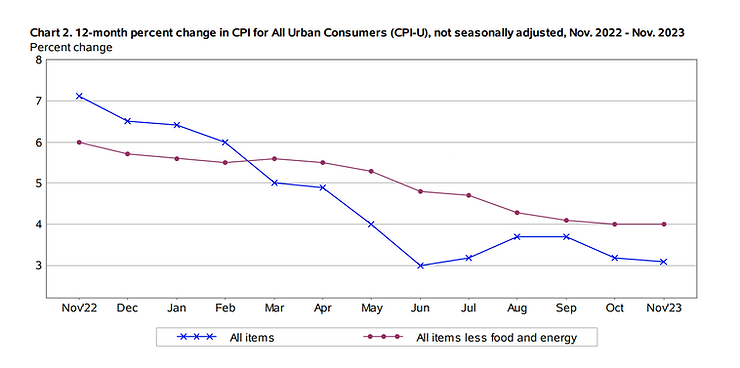
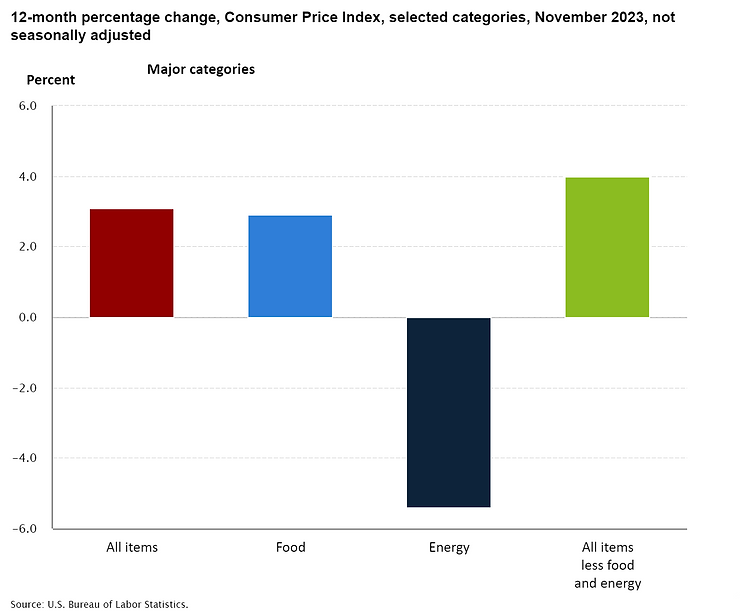
Photo 1 by Nerene Grobler


120514_WWBrock_1

Wendell W. Brock, MBA, ChFC

Subscribe by Email

Follow Me

Most Popular Posts

Other Sites I Follow, hobbies, fun and info:

gold-vs-silver-1.jpg  Nauvoo Mint brokerage services for precious metals


john Mauldin chair

Note:

Outside Economics is not a registered investment advisory firm (RIA) and does not act as an RIA. Outside Economics does not provide any specific investment advice. Any information obtained from this website or through one of  Outside Economics' representatives should be reviewed by a professional.

Subscribers Note: We do not sell our email list. Period. Thank you for subscribing.

Recent Posts