
Outside Economics

Bronze, Silver, or Golden Years– Your Health Matters

Posted by Wendell Brock on Wed, Jan 15, 2025

Bronze, Silver, or Golden Years– Your Health Matters

  • Wendell Brock
  • Jan 15, 2025
  • 2 min read

60, 63, 71, 75. What do all these numbers have in common? They are the average healthy life expectancy for different countries around the world. The US ranks pretty low despite the fact that we spend more money on health, 16.9% of our GDP, higher than any other           Organization for Economic  Co-operation and Development (OECD) country. The US is projected to drop from 80th to 108th by 2050. The United States has a lower healthy life expectancy than Canada, Japan, and most Western European countries.


Healthy life expectancy is more than just the projection of how long the average person will live. It accounts for both the quantity and quality of life, estimating how many of your years will be free of chronic diseases, physical impairments or limitations, and mental health issues.



Recent studies have shown that 80% of your health depends on your lifestyle and habits, like how active you are, your diet, and the environment you live in; unfortunately, the US has been falling behind in all those areas for the last few decades.


Modern medicine has increased life expectancy, but this has not brought with it an equivalent healthy life expectancy. Many people are living longer, but many of those additional years are lived with chronic diseases like hearth disease, diabetes, and cancer. The healthy life expectancy in 2024 was 63.9 years, a decline of 1.4 years from 2000.


What does this mean for your retirement? Many people plan for retirement based on how they live at the current time. However, once you reach a certain age, past the “healthy life expectancy,” your cost of living will increase based on your health needs. (This is why it is incredibly important to make sure you have signed up for Medicare and put into place all your supplement plans.) Healthy life expectancy has become a crucial indicator for retirement quality.


Looking at the data can cast a shadow on the golden years following your career, making them seem like they won’t be as enjoyable as you had hoped. Luckily you can make changes that can dramatically improve your health over time. Make simple choices that will improve your health in the long run. You can make small changes such as getting up and taking a walk after sitting for a long period of time, saying no to sweets at least once a day, going to bed earlier, add in more vegetables to your diet, drinking more water, or exercising at least ten minutes each day. As you successfully incorporate one healthy habit, add in another.


It is so important to prioritize your health NOW. Don’t wait until you retire, don’t risk losing your healthy years. The best investment you can make is in your own health.



Reading Between the Lines: The Dangers of Declining Literacy

Posted by Wendell Brock on Fri, Jan 10, 2025

Reading Between the Lines: The Dangers of Declining Literacy

  • Wendell Brock
  • Jan 10, 2025
  • 2 min read

Over the last few decades student reading performance has been a growing concern, declining since the 1970’s. The National Assessment of Educational Progress (NAEP) shows that reading scores have been consistently declining since 2012. In 2023 the nine-year-olds group had their largest decline in reading since 1990.


In 2024, the literacy rate in the US was 79%, meaning 79% of adults had literacy skills that allow them to compare and contrast information, paraphrase, and make low-level inferences. The remaining 21% of adults had low literacy skills, boiling down to about 43 million adults in the United States not able to read at a functional level.


Diving into that 79% literacy a little deeper we see that the average American reads at a 7th to 8th grade level, and 54% of adults have a literacy below a 6th grade  level. 44% of American adults do not read even a single book in a year. 33% of high school graduates never read a book after high school.


According to most experts, the average age when a child in the US can read well is around 6 or 7 years old. Statistically students that can’t read proficiently by the end of fourth grade will end up in jail or on welfare. 85% of juveniles in the court system are illiterate. 70% of      inmates in US prisons can’t read above a 4th grade level. According to the Department of Justice, the link between academic failure and delinquency, violence, and crime is connected to reading failure.


The Child Mind Institute states that reading to a child at a young age, even before they can communicate    verbally, helps to lay a foundation for the neurological groundwork for effective language and literacy. Many studies have shown that when a family, especially the mother, reads to and teaches young children they perform better academically, including literacy. 78% of peer-reviewed studies on academic achievements show that homeschooled students perform significantly better than those in institutional schools. This is believed to be because of the effects of being in a family setting and having more one-on-one attention and learning.


Reading is considered to improve societies because it helps the reader to develop empathy, increases their knowledge and understanding of diverse perspectives, promotes critical thinking, and encourages tolerance towards different viewpoints. Reading leads to a more informed and engaged population.


Reading is important for our health as well. Multiple   studies have shown that reading reduces stress and    promotes wellness and can even help improve sleep. It can also help combat Alzheimer’s and Dementia and decrease the feeling of loneliness or social isolation.

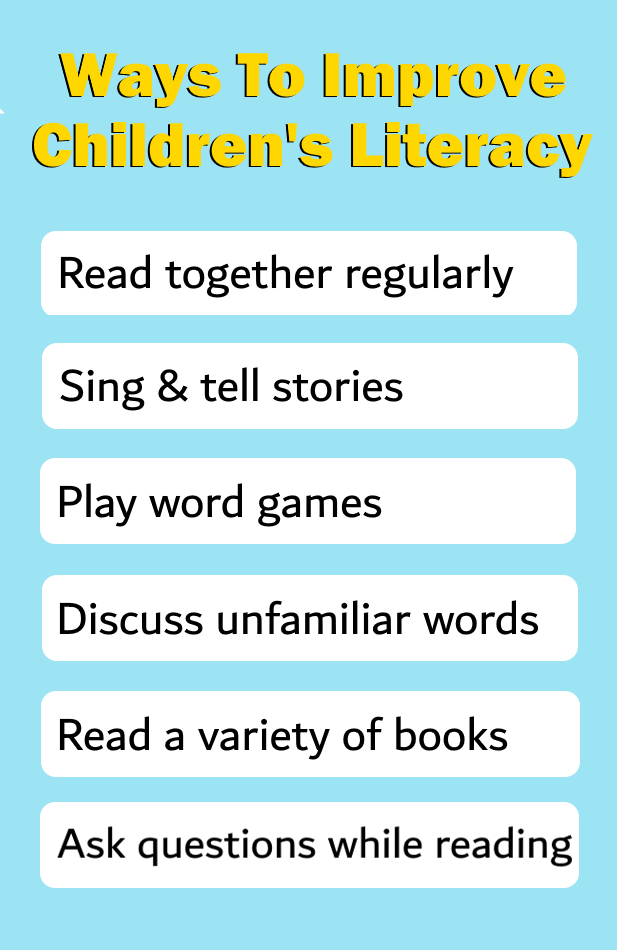
It is crucial that we foster a love of reading in the people of this country. It is critical that reading becomes a focus of our education system. This year instead of the typical New Year’s resolutions, perhaps you could focus on and encourage those you know to read more. You could join a book club, make a reading/book goal chart, share books with loved ones, learn a new word each day, or devote a certain amount of time each day to reading.


For the health and wellbeing of our nation, it is paramount that we raise the literacy rate and encourage reading in the younger generations.


120514_WWBrock_1

Wendell W. Brock, MBA, ChFC

Subscribe by Email

Follow Me

Most Popular Posts

Other Sites I Follow, hobbies, fun and info:

gold-vs-silver-1.jpg  Nauvoo Mint brokerage services for precious metals


john Mauldin chair

Note:

Outside Economics is not a registered investment advisory firm (RIA) and does not act as an RIA. Outside Economics does not provide any specific investment advice. Any information obtained from this website or through one of  Outside Economics' representatives should be reviewed by a professional.

Subscribers Note: We do not sell our email list. Period. Thank you for subscribing.

Recent Posts