Outside Economics

Get A Hobby!

Posted by Wendell Brock on Tue, Oct 24, 2023

Get A Hobby!

  • Wendell Brock
  • Oct 24, 2023
  • 1 min read

In today’s world most people are running to and fro, here and there, and everywhere in between tackling life’s busy schedule. Few people have the luxury of free time...or do they? People tend to have more time than they realize, being caught up in the illusion of busyness. Between email, texts, social media, and many other busy distractions, there are precious moments that could be spent improving your health and quality of life. So are there better things to be doing with our unaccounted for “downtime moments?”


Having a hobby has been shown to have many benefits, especially to one’s mental and emotional health. A hobby is any activity that you do for pleasure during your leisure time. This could be anything from physical, artistic or creative, or intellectual activities.

But what if you don’t have a hobby? Find one! This in itself could be a very rewarding process in which you learn more about yourself. The process of finding a new hobby can be very rewarding. Try a multiplicity of things that make you feel happy or excited and if when you end an activity you feel fulfilled or rejuvenated add it to your “keep list”, if not, move on to the next activity.


So, unwind and enjoy those valuable moments in which you can indulge in things that make you happy and healthy! Don’t be discouraged with the effort needed to accomplish a hobby project, all good things in life take effort, stretch yourself a bit doing something new.

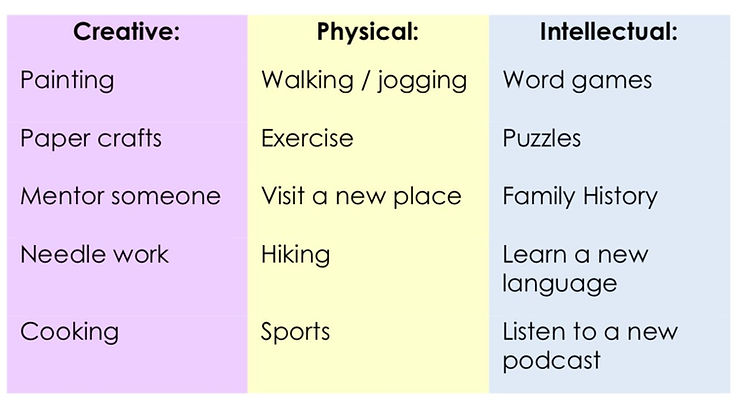
No hobbies yet? That’s ok, here’s some ideas to get you started:


Good, Better, Best

Posted by Wendell Brock on Tue, Oct 17, 2023

Good, Better, Best

  • Wendell Brock
  • Oct 17, 2023
  • 2 min read

It’s good to have all your assets listed, net worth calculated, personal information, passwords, emails, etc. laid out for your surviving relatives, but this is not enough. If you don’t have an estate plan your assets will have to go through probate, where a judge will decide how to divide your estate according to your state laws. Once in the court system your will, your assets, and everything attached to your estate, including who inherits each asset, will become public information. This can be a long, expensive process. It can be frustrating and cause contention within your family. This is not a situation you want your loved ones to endure.

It’s better to have a will. In a will, you can dictate who should receive your assets and how you want your possessions distributed. Unfortunately, as previously mentioned, this will not save you from probate. The only thing that changes is the judge will divvy up your assets based on your expressed wishes. Your assets will still be locked up and inaccessible to your heirs until the legal process has run its course, again costing your family time, money, and a bucket load of frustration.

The best way to protect your assets and your loved ones is to create an estate plan that includes a revocable living trust (trust). A trust allows you to not only dictate who gets what, but also when and how, along with whatever other provisions you would like to include. A living trust avoids the lengthy, expensive, public probate process.

A living trust is a legal arrangement set up by someone (the grantor(s)) to protect their assets and their wishes for their family. A living trust designates a trustee and gives exact instructions on how things should be handled at the time of the grantor’s death. The trustee then manages the assets contained in the trust according to those directions and the beneficiaries’ best interests.

Within your trust you can decide not just what your heirs will receive, but when and how. This helps protect your heirs from themselves, irresponsible spending, unforeseen issues that may arise in the future, or from your assets going to unintended people. Some people may want to provide specific benefits to children or grandchildren, like college funding or help with buying their first home. It can also help protect assets for your adult children in the case of divorce. Having a trust is particularly important when there is a second marriage, as the state laws may not distribute assets the way you want.

A trust brings all of your assets together into one plan and provides beneficiary designations. This provides protection and privacy for your estate and loved ones. And because a trust is revocable while the grantor(s) is alive, the directions and stipulations set forth can be changed and revised at any time by the grantor.


Taking care of your family doesn't have to end at death. IF you take the time to establish the appropriate estate plan and include a living trust, your care and protection of your family and loved ones can continue long after death.


Photo by : Kevin Delvecchio


Is Our Country Living Beyond Its Means?

Posted by Wendell Brock on Tue, Oct 10, 2023

Is Our Country Living Beyond Its Means?

  • Wendell Brock
  • Oct 10, 2023
  • 2 min read

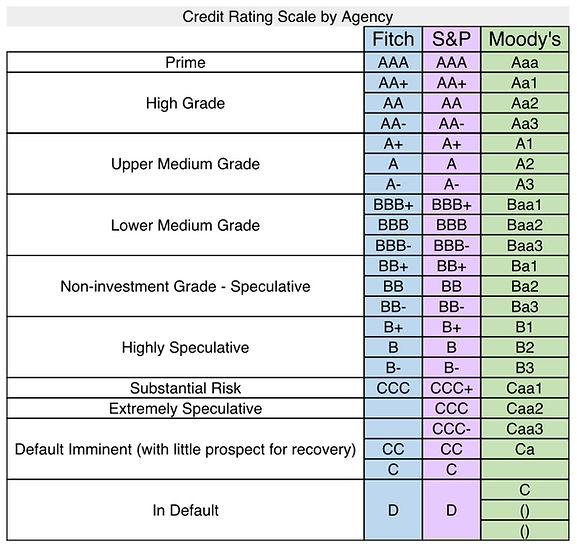
On August first of this year, Fitch Group, one of three top credit rating agencies in the United States, announced a decrease in the credit score of the United States, taking it from a AAA rating to a AA+. This credit rating expresses the forward-looking opinion of the Fitch Group as it looks at the strength of the institution’s ability to pay back its debts. Back in 2011, Standard and Poor’s downgraded the US for the first time in the U. S’s history. Both times have come after issues and debates regarding the debt ceiling.


While neither hit was a huge drop, investors use these rating systems to gauge whether certain investments are likely to default or yield a reliable return, for lending and borrowing decisions, as well as strategic planning. Most economists and investment specialists believe there won’t be too many investors bothered by the decrease, especially those that have a long-term investment strategy.

The immediate concern regarding the downgrade by Fitch was that it could potentially weaken the foundation of trust that our global financial system is built on, calling into question whether the U.S. government will be able to pay back its debts. If the investors that hold the U.S.’s debt lose that trust it could result in something similar to a bank run, in which our government would have to pay back more than what they have available. The downgrade can be seen as a red flag alerting that the U.S. government has a spending problem, which erodes confidence in their fiscal management.

Luckily, in the after-hours trading following the downgrade, the U.S. Treasuries held steady. Politicians and economists immediately assured investors and citizens alike that the downgrade was “arbitrary and of no concern”. However, global news reports expressed unease and questioned the U.S. government’s ability to manage their debt and called into question their governance system. This is a great concern, which our politicians must address, they can’t go forward piling on more and more debt.

Since 2002, the federal government has run a deficit. That means each fiscal year, spending exceeds revenue, which then is added to the national debt. It is projected that spending will continue to outpace revenue by increasing amounts each year, forcing the government to borrow more every year to fund its operations.

In order to receive an upgraded score with Fitch and restore their previous good standing, the government will have to bring down their deficits, which are currently three times the AAA rating median. (Meaning of the 10 countries with a AAA, rating our country is running a deficit 3 times higher than the median of those 10). They will also have to implement long-term fiscal solutions and will have to show that their governance is on the mend.

With our national debt over 44 trillion, the federal government is clearly living beyond its means. Addressing our national debt is critical in securing our national economic future.


120514_WWBrock_1

Wendell W. Brock, MBA, ChFC

Subscribe by Email

Follow Me

Most Popular Posts

Other Sites I Follow, hobbies, fun and info:

gold-vs-silver-1.jpg  Nauvoo Mint brokerage services for precious metals


john Mauldin chair

Note:

Outside Economics is not a registered investment advisory firm (RIA) and does not act as an RIA. Outside Economics does not provide any specific investment advice. Any information obtained from this website or through one of  Outside Economics' representatives should be reviewed by a professional.

Subscribers Note: We do not sell our email list. Period. Thank you for subscribing.

Recent Posts