Outside Economics

Do You Find It All Taxing?

Posted by Wendell Brock on Fri, Aug 16, 2024

Do You Find It All Taxing?

  • Wendell Brock
  • Aug 16, 2024
  • 2 min read

It might not seem like it, what with all the sunshine and hot summer temps, but 4th quarter is nearly upon us. Now is the perfect time to start thinking about…your taxes. There, I said it. I know no one likes to think about taxes, and while it may seem a bit early to worry about taxes, the end of the year will be here before you know it, and it’s never really too early to review, organize, and plan for filing your taxes.


End-of-year tax planning is a practice that involves making financial decisions aimed at optimizing tax efficiency, reducing liabilities, and taking advantage of available deductions and credits. Effective tax planning not only ensures compliance with tax laws but also allows individuals and businesses to retain more of their hard-earned income, reinvest in growth, or save for future endeavors.


While preparing for the current tax year, it is a good idea to review your previous year’s tax return and make note of any changes that have occurred since the last time that you filed. i.e. did you move, retire, change jobs, get married/divorced, or did your tax bracket change? Highlight any of those changes and find any paperwork associated with them.

Each time you file you are eligible for standard deductions and certain tax credits. If your tax bracket has changed, so may have some of your credits and deductions.


Remember that tax deductions help to reduce your taxable income, which means you will have a lower tax bill. You do not want to miss out on any that are available to you. Check your for eligibility for retirement contributions, educational expenses, medical bills, property taxes, mortgage interest, charitable donations, etc. Make sure you have the needed paperwork to prove you qualify for each one; this will protect you in the event of getting audited.


You might need to consider maximizing contributions to retirement accounts such as IRAs or 401(k)s, which can lower taxable income and provide long-term savings benefits. Similarly, businesses may accelerate deductible expenses or defer income to reduce taxable income for the current year.


Timing is also crucial in end-of-year tax planning. By strategically timing income and expenses, you or your business can smooth out their tax liabilities over multiple years, thereby optimizing their overall tax burden. This may involve deferring income into the following year or accelerating deductible expenses into the current year to maximize tax savings.


Don’t wait until the end of the year, or worse April 15th, to figure out what you can or could have qualified for. It’s like the old saying, “if you snooze, you lose.” Once we cross December 31, there’s no going back to claim things you might have been able to claim. When you plan ahead and keep your paperwork organized throughout the year, it will help you better manage your tax burden. If you stay on top of it, you will be able and ready to take advantage of all the available tax credits and deductions.



Food-flation: There’s No Sugar Coating It

Posted by Wendell Brock on Wed, Aug 07, 2024

Food-flation: There’s No Sugar Coating It

  • Wendell Brock
  • Aug 7, 2024
  • 3 min read

Updated: Aug 12, 2024


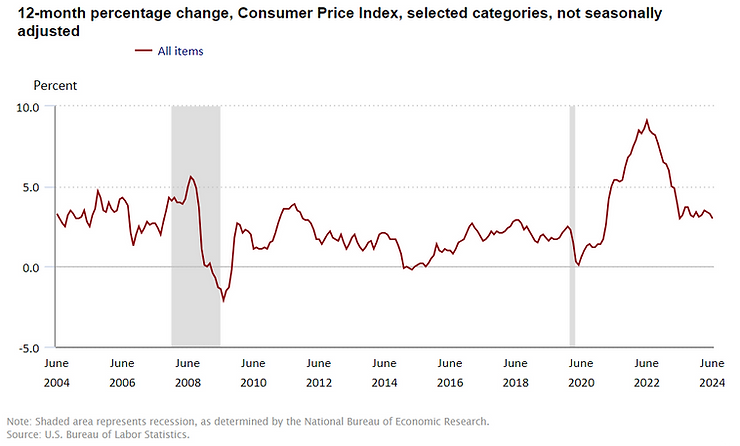
If you have felt frustrated with the exorbitant cost of groceries, you’re not alone. People all over the country are getting fed up and frustrated with the ongoing rise in food prices. Inflation may have slowed its pace, but that doesn’t mean consumers aren’t still feeling the sting of sky-high food prices. According to the Bureau of Labor Statistics, The Consumer Price Index for All Urban Consumers (CPI-U) increased 3.0% over the last 12 months to an index level of 314.175 (1982-84=100).


Overall, food prices have risen 26% since the beginning of 2020. Since 2019, according to Bloomberg, the average cost of a fast-food meal has surged 47%. The Labor Department reported back in May that dining out will cost you almost 30% more than back in 2019. As of May, the cost of eggs had been on the rise with triple-digit year-over-year increases throughout 2022 and 2023. Lately, U.S. consumers spend more than 11% of their disposable income on food. This is higher than it’s been in thirty years.


Back in May it looked as if food prices might be on the decline, but after finally dipping, grocery prices rose by 0.2% from May to June, igniting frustration in consumers. The latest CPI report shows food prices are up 0.24% from June 2024 and 2.23% higher than they were 12 months ago. When compared to overall prices in 2023 there was a 5.7% increase.


Historically, food price spikes have been linked to social unrest and political instability, especially in the more economically vulnerable regions. While we’re not seeing people taking to the streets (at least not yet) people are taking to their social media platforms. Social media has been splattered with shocked consumers comparing their grocery bill from 4 years ago to today’s outrageous prices. Since February of 2020 consumer prices have increased over 20%. That’s quite a bit above the historic average for a four-year period. According to Yahoo finance, a basket of groceries that cost $100 in November 2020 would not cost $125.80, an increase of nearly $26 dollars for the exact same food items.


The rising cost isn’t the only sting. Adding salt to the wound is what’s now called “shrink-flation.” This is where companies charge the same price (or more) for a smaller amount of product. So that basket of food that increased $26 dollars may have the same products, but many of them are smaller than they were back in 2020, increasing the gouge consumers are feeling.


While we have seen some individual food items like some fruits and vegetables come down, the overall cost of groceries hasn’t really decreased, at least not enough to make a difference in people’s budgets. We are seeing a glimmer of light, however, as wages are slowly catching up and inflation begins to ebb. (As reported by the BLS, From June 2023 to June 2024, wages have increased 5.1%).


So, what can you do? One of the best ways to combat food inflation is the old fashion practice of growing your own garden. You could also find reliable local sources. Visiting your community farmer’s market is a great way to invest in farm fresh produce, preserves, salsa, soaps, lotions, and other products. Not only do local farms provide higher quality and better tasting foods they usually offer products that are less likely to contain harmful chemicals. Supporting your local farmers and makers is also another great way to support your local economy.


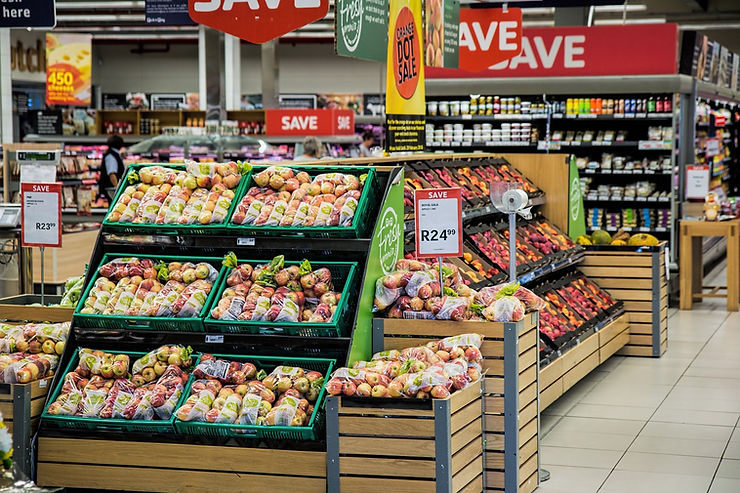
Photo 1 by: Stevepb

Photo 2 by: Bruno Kelzer

8 views
0 comments

Economic Indicators: Consumer Price Index &Producer Price Index

Posted by Wendell Brock on Wed, Aug 07, 2024

Economic Indicators: Consumer Price Index &Producer Price Index

  • Wendell Brock
  • Aug 7, 2024
  • 1 min read

Consumer Price Index

The Consumer Price Index for All Urban Consumers declined 0.1% to 329.52 after being unchanged in May. The 0.1% decline could be an indication that inflation is coming down. When the CPI falls it means that consume prices are generally falling.

The rate of inflation impacts monetary policy decisions and interest rates set by the Fed. Higher interest rates can cause business activity to slow and result in increased overall consumer spending, which can   impact how much consumers are willing to invest.


Producer Price Index

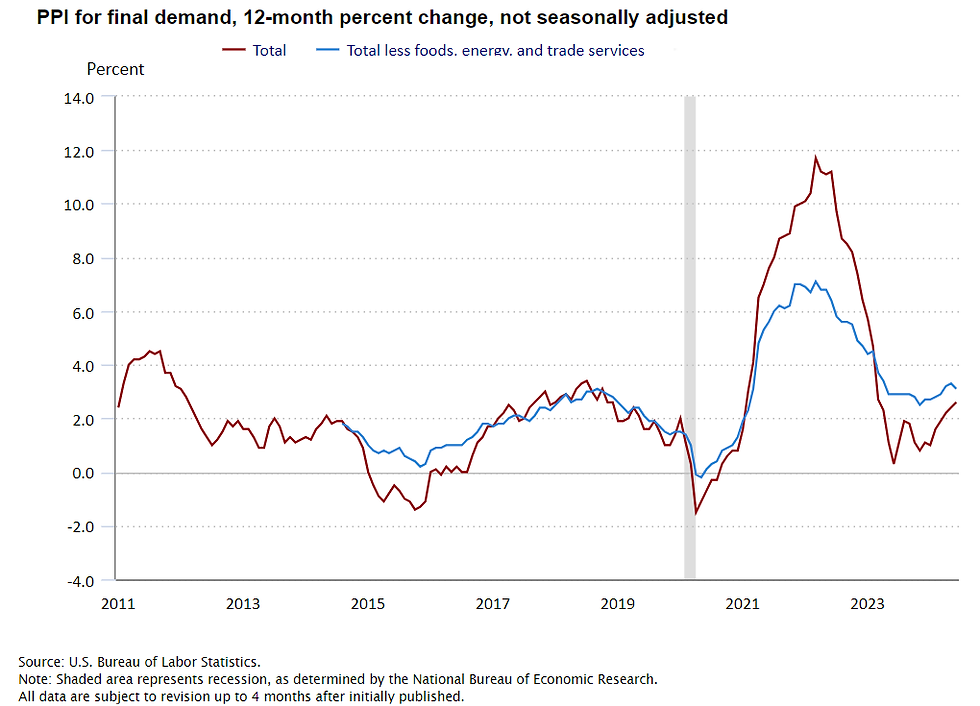
As of July 12, 2024, the U.S. Producer Price Index is (PPI) was 144.40, a 0.22% increase from the previous month and a 2.65% increase from 138.92 the same time last year. An increase in the PPI indicates that producer costs are rising and price increases may eventually be passed down to consumers. By monitoring price changes from raw material to finished goods to distribution, the PPI can reveal coming inflation for consumers. Typically, when we see an increase in the PPI it eventually leads to an increase in the CPI.


120514_WWBrock_1

Wendell W. Brock, MBA, ChFC

Subscribe by Email

Follow Me

Most Popular Posts

Other Sites I Follow, hobbies, fun and info:

gold-vs-silver-1.jpg  Nauvoo Mint brokerage services for precious metals


john Mauldin chair

Note:

Outside Economics is not a registered investment advisory firm (RIA) and does not act as an RIA. Outside Economics does not provide any specific investment advice. Any information obtained from this website or through one of  Outside Economics' representatives should be reviewed by a professional.

Subscribers Note: We do not sell our email list. Period. Thank you for subscribing.

Recent Posts