Outside Economics

Money Supply

Posted by Wendell Brock on Mon, Mar 25, 2024

Money Supply

  • Wendell Brock
  • Mar 25, 2024
  • 1 min read

Money supply refers to the volume of money held by the public at a particular time, this includes the currency in circulation (physical cash) and demand deposits (the assets on the books of financial institutions). The record of money supply is kept by the Central Bank of the country. 

Changes in the money supply have been seen as a key factor in driving the economy and business cycles. In the past, measuring the money supply has shown correlation between money supply and inflation as well as between money supply and price levels. However, over the last couple of decades, the relationship between money supply and inflation has become less predictable, making it less reliable as a guide for monetary policy. For this reason, monitoring money supply is used along side other economic measures, which allows for a broader, more accurate picture of the economy.

When the supply of money circulating increases, we typically see lower interest rates, which then generates more investment and puts more money back into circulation for consumers, which then leads to more spending. However, we can see the inverse of this when money supply falls or growth rate declines. When this happens, banks lend less, consumer demand declines, and people tend to hold on to their money rather than spending it, decreases again the amount of money in circulation. Further effects can be seen as businesses slow growth or lay off employees and home and car loans decline.


Understanding the Basics of Medicare

Posted by Wendell Brock on Mon, Mar 18, 2024

Understanding the Basics of Medicare

  • Wendell Brock
  • Mar 18, 2024
  • 3 min read

Turning 65 can mean a lot of things, but for most people it means signing up for Medicare. This can be a confusing thing to navigate. Let’s take a look at some Medicare basics and what your options are.


Medicare is a federal health insurance program. Those who are turning 65 can sign up between three months before their birth month and three months after their birth month, providing a 7-month window.


There are different parts of Medicare to cover specific services.

Medicare Part A (hospital insurance) covers inpatient hospital stays, care in a nursing facility, hospice, and some limited home health care. Normally, you don’t pay a monthly premium for Part A. There are some people who are not eligible for premium-free, but might be able to purchase Part A.


Part B (medical insurance) covers most doctor visits, outpatient care, medical equipment, diagnostic testing, ambulance service, and preventative services. Part B requires a premium amount, which for most people in 2024, is $174.70 per month and an annual deductible of $240. After the deductible is met, Medicare Part B covers 80% of your covered medical services, the remaining 20% you pay out of pocket.


Medicare Parts A & B are often called Original Medicare. Original Medicare pays most, but not all, of the costs of covered health care services. A Medicare Supplement Insurance, also known as Medigap, can help pay some of the remaining costs of your health care. This includes things like copayments, coinsurance, and deductibles, (the 20% from above). Some Medigap policies may also cover services or supplies Original Medicare doesn’t cover. Generally, you must have Medicare Parts A & B to buy a Medigap policy. One of the big advantages of a Medigap policy is you have the freedom to see any doctor that accepts Medicare.


Part C is known as Medicare Advantage and offers an optional, alternative way to receive your Original Medicare benefits. These plans are offered and managed by private health maintenance organizations (HMO’s). Instead of having Original Medicare, Parts A & B, you would have a managed plan like an HMO. To be eligible, you must already be enrolled in Parts A & B. These plans will cover the same services that traditional plans cover, but the independent HMO are allowed to set their own cost share requirements as well as their own co-pay and coinsurance amounts that you are responsible for paying. These costs are subject to increases as per the HMO. They also have different rules for how you can receive services. A downside to Medicare Advantage plans is they don’t always cover certain expenses when you get sick, resulting in unforeseen out-of-pocket costs, and what you end up paying for these plans can differ depending on your overall health. A significant limitation is Medicare Advantage plans use a network of doctors and hospitals, restricting your care to a list of approved doctors and facilities.


One challenge with the Medicare Advantage plans is that they can leave a market area and stop covering people in that area. Leaving these people to wake up one day with no additional coverage other than their original Medicare parts A & B. Medicare Supplement insurance companies can’t do that, providing you with reliable coverage. Once you are covered, the only way to lose the policy coverage is to stop paying the premiums. 


Part D helps pay for prescription drugs and recommended shots and vaccines. To get Medicare drug coverage, you must join a Medicare-approved plan that offers drug coverage. Each plan varies by cost and specific drugs covered, but they all must provide at least the standard coverage set by Medicare.


Deciding what coverage works best for you and your situation can take some research and consideration and will depend on your own personal factors. Do your homework and review each plan and its pricing.

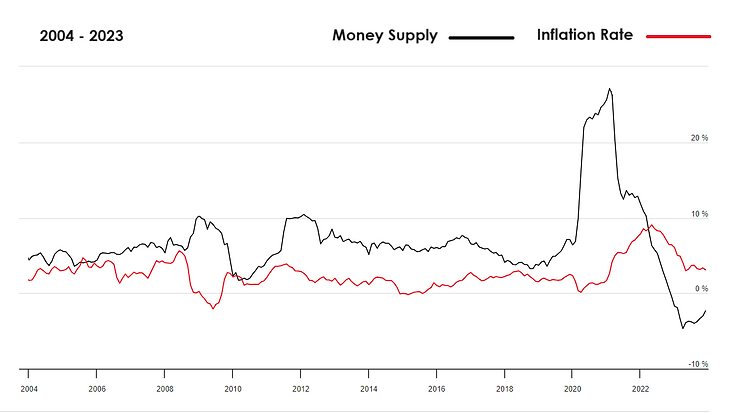
 

Photo 1 by Marcelo Leal

Photo 3 by freestocks


Start Your Spring Cleaning

Posted by Wendell Brock on Mon, Mar 11, 2024

Start Your Spring Cleaning

  • Wendell Brock
  • Mar 11, 2024
  • 2 min read

Your house is a very, very, very fine house, with two cats in the yard, life used to be so hard. Now everything is easy 'cause…you updated your property and casualty policy.


Property & Casualty insurance (P&C) is a term for policies that cover things like your house, cars, RVs, boats, motorcycles, etc. and the liabilities associated with them. These types of policies help safeguard against property damage as well as protect you from liability issues.


Most often, a person’s home is their biggest asset. Doesn’t it make sense to make sure it’s properly protected in case of a loss? Now is a great time to do some “spring cleaning” regarding your P&C policies. Because of the high inflation we have experienced, and the significant increase in home values, it’s important to make sure your coverage is up to date with the current value of your home.


Homeowners are typically required to maintain a policy that covers 80% of the replacement value of their home. If the coverage falls below the required amount the insurance company assumes the homeowner is self-insuring for the difference. This is called the coinsurance clause in the policy. This clause requires a policy holder to maintain the right level of coverage, so the insurance company receives a fair premium for the risk of possible claims.


Here's an example of how the increase in value of your home can result in inadequate coverage if your policy is not updated. If you bought a house for $300,000 and the insurance company is insuring it for 80% of the value (the required coverage, excluding the value of the land, which is not part of replacement value of the house), and you suffered a loss, the insurance company would pay up to $240,000 to rebuild the house. If your house increases in value from $300,000 to $500,000 the insurance company will pay per the coinsurance formula in the policy.


The typical coinsurance formula is:

(actual amount of insurance / required amount of  insurance) X amount of loss = amount of claim.


If your policy hasn’t been updated to the proper value this is how the insurance company would calculate the payment for the loss filed: ($240,000 / $400,000) X $100,000 = $60,000. Resulting in a $20,000 coinsurance cost to the homeowner to complete the needed repairs.


Some homeowner policies have an inflation clause that automatically increases the policy to the required level. This is one reason why homeowners policies tend to increase regularly, because the value of the home keeps going up. While we don’t anticipate having losses, they do happen, so we need to keep our policies up to date to make sure we don’t fall into a coinsurance scenario. 


Photo by Ian MacDonald


120514_WWBrock_1

Wendell W. Brock, MBA, ChFC

Subscribe by Email

Follow Me

Most Popular Posts

Other Sites I Follow, hobbies, fun and info:

gold-vs-silver-1.jpg  Nauvoo Mint brokerage services for precious metals


john Mauldin chair

Note:

Outside Economics is not a registered investment advisory firm (RIA) and does not act as an RIA. Outside Economics does not provide any specific investment advice. Any information obtained from this website or through one of  Outside Economics' representatives should be reviewed by a professional.

Subscribers Note: We do not sell our email list. Period. Thank you for subscribing.

Recent Posts