
Outside Economics

So You Want To Invest?

Posted by Wendell Brock on Thu, Apr 18, 2024

So You Want To Invest?

  • Wendell Brock
  • Apr 18, 2024
  • 3 min read

When you invest your money, you’re making your money work for you. Even small amounts of invested money can earn you money due to the power of compounding.  Investing can generate wealth, help you meet financial goals, and aid in securing a solid retirement.

Investing is a personal thing, there is no one set plan for everyone, and your strategy will depend on your own personal financial situation, how long you have to invest, as well as how much risk you are willing to take.


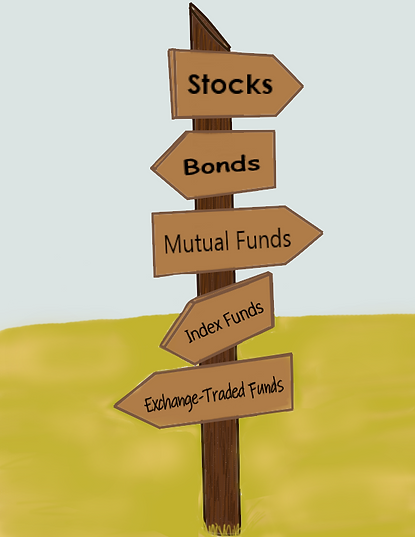
Let’s look at a few of the most common types of investments.


Stocks

Stock is a share in the ownership of a specific company; it represents a small piece of a company’s assets and earnings that you get to claim. Companies sell shares of stock to raise cash. When the value of a company goes up, it’s reflected in the value of their stock. Investors make money on stock when they sell it for higher than what they purchased it. Some stocks also pay dividends to investors, which are distributions of the company’s earnings. Stocks have the potential to earn high returns but can also come with a high risk because the company can lose money or even go out of business.


Bonds

A bond is a loan that you make to the government or a company. When you purchase a bond, you allow the issuer to use your money and pay you back with interest, which is typically paid to investors once or twice a year. The total principal is paid back at the bond’s maturity date. Bonds are usually considered to be low risk, but they usually offer lower returns. Government bonds, especially U.S. Treasury securities, are considered to be the safest investment option available. This is because they are backed by “full faith and credit” of the United States.


Mutual Funds

For a lot of people picking individual stocks can be overwhelming or undesirable. That’s where mutual funds come in. Mutual Funds allow investors to purchase bulk stocks in a single transaction. Mutual funds pool money from multiple investors which gives it more purchasing power. A professional manager uses the invested money to purchase stocks, bonds, and other assets for the fund. Mutual funds follow a predetermined strategy and focus on investments that fall in line with it. When the mutual fund earns money, it distributes a portion of that to the investors of the fund.


Index Funds

Index funds are special mutual funds or ETFs with a portfolio of stocks / bonds that track and mirror an index, like the S&P 500, and hold investments from that particular index. This cuts out needing an active manager and results in lower fees. Index funds have    become more popular over the last decade.

Exchange-traded funds (ETFs)

ETFs are investment funds that trade on the stock exchange. They are similar to individual stocks but are designed to track the performance of a particular index, commodity, sector, or asset class. This allows for a diversified portfolio of assets and exposure to various markets and industries. Like mutual funds, ETFs are passive, which results in lower fees.


There are many other types of investments with varying degrees of risk. Finding the right type of investments for you may take time and research. When investing, remember to consider your financial goals, your personal risk tolerance and find companies or other investments that you understand. If you have questions, please don’t hesitate to contact our office. It’s always wise to seek professional advice before jumping into an investment.



Industrial Production Index

Posted by Wendell Brock on Thu, Apr 18, 2024

Industrial Production Index

  • Wendell Brock
  • Apr 18, 2024
  • 1 min read

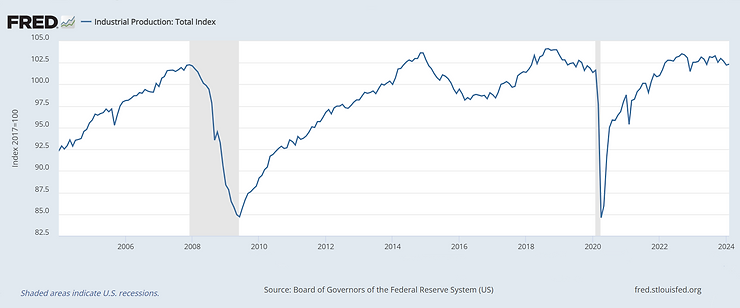
When economists refer to industrial production they are referring to the output of industrial establishments, which covers sectors like mining, manufacturing,  electricity, gas, and air-conditioning. The industrial production index (IPI) shows us the change in volume of production output from these sectors.


The IPI is published in the middle of the month by the Federal Reserve Board. It measures levels of production and the capacity of the manufacturing sector relative to a base year, which is currently 2012. IPI does not express absolute production volumes,  rather the percentage change in production relative to the base year. Revisions are then made to previous estimates based on the data expressed within the index and released at the end of the month.


The IPI is an important economic indicator for economists and investors, especially those     investing within specific lines of business. Fluctuations at the industrial level trickle down to other sectors and account for most of the variation in overall economic growth. The monthly  index helps alert investors to any shifts in output.


Annual changes in industrial production help us see and better understand the state of our economy and where we are within an economic cycle because the production of consumer durables and capital goods tends to decrease during economic downturns. Even though the industrial sector only accounts for a portion of our economy’s total output (less than 20% of GDP) it is still a leading indicator of economic performance due to its direct link to consumer demand and interest rates.


Is Cash Still King?

Posted by Wendell Brock on Wed, Apr 17, 2024

Is Cash Still King?

  • Wendell Brock
  • Apr 17, 2024
  • 2 min read

It seems like everything is available online these days. With more and more of our lives moving online (communication, work, scheduling, meetings, socializing, games, and so much more) is it any surprise that 81% of Americans shop online? In 2023 there were 274.7 million online buyers. A 2023 study done by the Federal Reserve found that credit cards were the most preferred payment method for most US consumers, making up 31% of all payments. The myriad online purchases and the ever-increasing push towards digital currency begs the question: does cash still have a place in our economy?


While shopping online has certainly made some things easier and more convenient cash isn’t quite ready to give up the crown. There are still a lot of benefits to using cash.


In an economy where every penny matters, using cash helps pinch those pennies a little more because it incurs no fees. In contrast, every time you swipe a card, you’re being charged a processing or transaction fee.


Shoppers that use cash don’t have to worry about overspending because they are limited to what they have in their wallet. Using cash goes beyond just what consumers carry with them; a study done by MIT showed that people are willing to spend up to 100% more on transactions that involved digital payments. Often, using digital currency gives people the feeling they have more spending power than they actually do.


Paying with cash can keep you from impulse spending. This is very beneficial when budgeting and allotting certain amounts of money for each area of spending. 


Paying with cash helps small businesses. Every time a customer swipes a card the credit card companies charge fees the small business must pay. In the long run, handling cash is cheaper for business.


Cash can offer better privacy when it comes to your personal information. When using digital payment methods, you leave a digital trail which can be picked up by hackers and other cyber criminals.


There are some downsides to cash, while your personal information is safer with cash, the risk of loss is higher and much more difficult to rectify. Whereas, credit cards and mobile wallets can be frozen, and often reimbursed. Another drawback to cash is its bulk. Carrying stacks of bills and cumbersome coins can be bothersome, especially when compared to the slim credit or debit card.


Whether using cash or digital currency there will be limits and advantages to either. It’s best to find a balance that works for your budget and helps you create and keep healthy spending habits.


 Photo 2 by Nathan Dumlao


120514_WWBrock_1

Wendell W. Brock, MBA, ChFC

Subscribe by Email

Follow Me

Most Popular Posts

Other Sites I Follow, hobbies, fun and info:

gold-vs-silver-1.jpg  Nauvoo Mint brokerage services for precious metals


john Mauldin chair

Note:

Outside Economics is not a registered investment advisory firm (RIA) and does not act as an RIA. Outside Economics does not provide any specific investment advice. Any information obtained from this website or through one of  Outside Economics' representatives should be reviewed by a professional.

Subscribers Note: We do not sell our email list. Period. Thank you for subscribing.

Recent Posts