
Outside Economics

The Economics Of Disaster

Posted by Wendell Brock on Wed, Dec 17, 2025

The Economics Of Disaster

  • Wendell Brock
  • Dec 17, 2025
  • 2 min read

Natural disasters like wildfires, hurricanes, floods are becoming more frequent and intense, and their economic impact stretches far beyond immediate damage. In recent years, these disaster events have reshaped not only community resilience but national macro-financial trends.
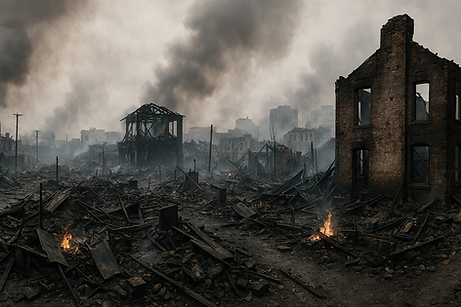
 

From 1980 to 2024, the U.S. endured 403 weather and natural disasters, each costing at least $1 billion, amounting to a staggering $2.9 trillion in total damages. Bloomberg has reported that in just the first half of 2025, floods, fires, and storms caused over $101 billion in      economic losses.


How do disasters hit the Economy? We’ve seen the destruction of capital; physical assets like homes, factories, roads, and power infrastructure are destroyed or heavily damaged. That’s a direct hit to productive  capacity. When capital is lost, labor has less to work with, which reduces workers’ productivity and lowers GDP.


Disaster recovery demands large injections of Federal spending. In recent years, disaster-related federal  spending has soared. In fact, Bloomberg Intelligence  estimates that over $7.7 trillion of U.S. GDP growth since 2000 has been tied to recovery and resilience spending.
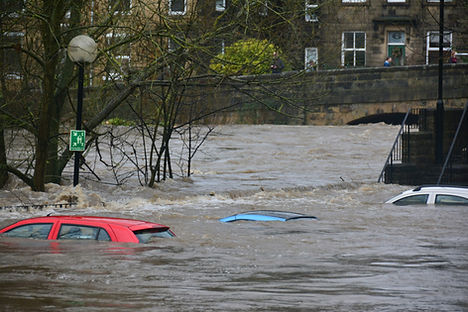
On the flip side, sectors like insurance, construction, self-storage, and energy infrastructure benefit from rebuilding. Bloomberg’s “Prepare and Repair Index,” which tracks companies tied to disaster recovery, has outperformed the S&P 500 by ~6.5% annually over the past decade.


At the local level, the effects of disaster are felt deeply. Disasters disrupt employment and business activity. Factories may halt, roads may collapse, and supply chains break, reducing economic output immediately. Poorer regions struggle most, while wealthier areas can mobilize resources to rebuild quicker,. Marginalized communities often lack the capital and insurance coverage to fully recover. Public infrastructure, such as schools or hospitals damaged in disasters, may not get rebuilt to previous levels. In some cases, populations shrink, as residents relocate permanently.


Beyond infrastructure, disasters inflict trauma, displace families, and degrade natural capital. Many of these losses aren’t captured in GDP: mental health, environmental degradation, and disrupted social networks fall through the cracks of traditional economic metrics.
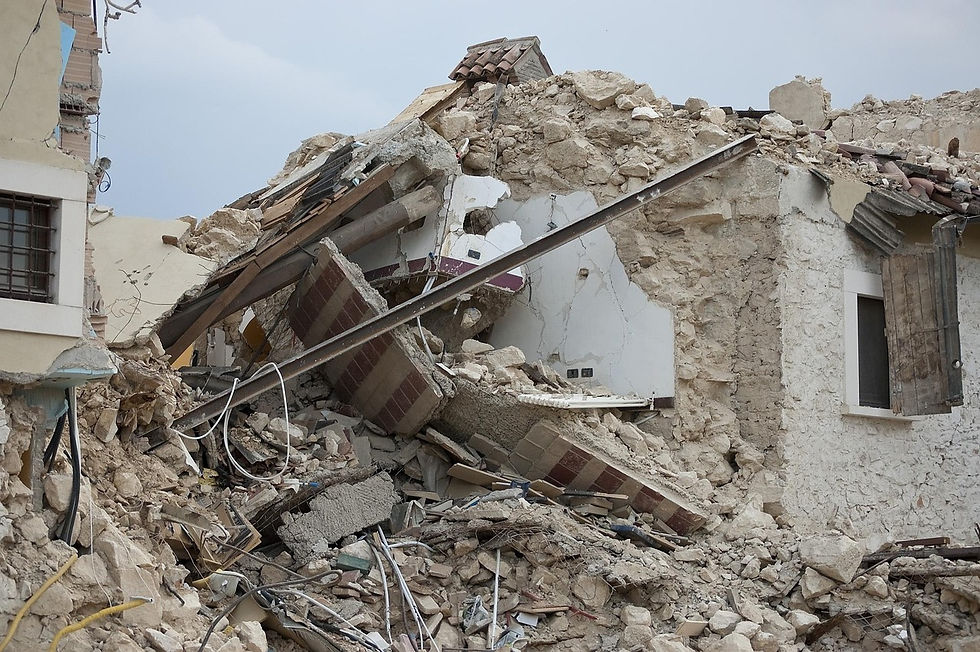
 

“Recovery Booms” can be misleading. It’s tempting to say disasters are "good for the economy" because rebuilding creates work. But economists caution against this view. The broken window fallacy shows that destruction doesn’t create real wealth. Repairing      damage, like a broken window, stimulates spending but diverts resources from productive uses, meaning no net economic gain occurs. Rebuilding after disasters or crises may create visible activity, but it doesn’t replace what was lost or generate true growth wealth.


Even if GDP ticks up during recovery, that growth often masks destroyed value. Total output has declined, capital has been permanently lost, and long-term social costs remain.


As disasters intensify, policymakers and investors should rethink their priorities. Building resilient infrastructure, improving building codes, and expanding insurance access are no longer just moral or planning issues, they’re economic imperatives.


From a macro perspective, disaster risk is now a driver of growth in some sectors. But at the community level, resilience is a lifeline.


Photo by Chris Gallagher

Photo by Angelo Giordano


The Shutdown No One Asked For

Posted by Wendell Brock on Wed, Dec 03, 2025

The Shutdown No One Asked For

  • Wendell Brock
  • Dec 3, 2025
  • 2 min read

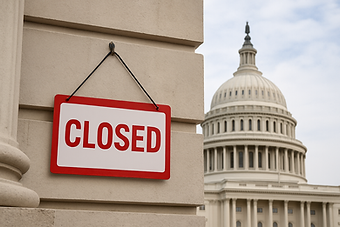
In October 2025, the United States entered the longest federal government shutdown in its history after Congress failed to pass full-year appropriations for  fiscal year 2026. The lapse began on October 1 and dragged on for 42 days, 22 hours, and 25 minutes   before lawmakers finally reached a funding deal in mid-November.

The standoff centered on spending levels, with Senate Democrats rejecting a short-term Republican funding bill. Much of the dispute revolved around health-care funding, particularly ACA tax credits. Without a continuing resolution, all non-essential federal operations ground to a halt.


The economic fallout was immediate. Goldman Sachs estimated each week of the shutdown reduced annualized GDP growth by about 0.2 percentage points and cost roughly $15 billion in lost economic activity. The Congressional Budget Office projected permanent losses of $7–14 billion even after recovery. Consumer demand weakened as hundreds of thousands of workers missed paychecks, and uncertainty spread across industries dependent on federal contracts. Key programs, from CHIPS Act initiatives to semiconductor and quantum manufacturing, faced delays, according to Democratic lawmakers.


Roughly 900,000 federal employees were furloughed, with hundreds of thousands more working without pay as “excepted” personnel. Thanks to a 2019 law, most were guaranteed retroactive pay once the government reopened. Still, delays in economic data, passport services, and other federal functions eroded public confidence.


Shutdowns also tend to worsen the deficit. Restarting agencies and catching up on delayed work often  requires extra funding, meaning the government ultimately spends more than if operations had continued uninterrupted.


Congress finally approved a funding package on November 12, ending the shutdown. The agreement extended current spending through January 30, 2026, and fully funded three of the twelve appropriations bills, Agriculture; Military Construction & Veterans Affairs; and the Legislative Branch (naturally, the branch responsible for the shutdown ensured its own funding). The deal also reversed recent workforce cuts, halted further layoffs, and formalized back pay for furloughed employees.


In practical terms, the shutdown disrupted normal economic activity and cost taxpayers more money, all while federal employees endured what amounted to a 42-day paid vacation while Congress had a paid   temper tantrum. As David Wessel of the Brookings Institution observed, shutdowns inflict real-world economic damage far beyond political theater.


The 2025 shutdown serves as a reminder of how fragile political consensus can undermine economic stability, and how essential it is for Congress to do its job.


120514_WWBrock_1

Wendell W. Brock, MBA, ChFC

Subscribe by Email

Follow Me

Most Popular Posts

Other Sites I Follow, hobbies, fun and info:

gold-vs-silver-1.jpg  Nauvoo Mint brokerage services for precious metals


john Mauldin chair

Note:

Outside Economics is not a registered investment advisory firm (RIA) and does not act as an RIA. Outside Economics does not provide any specific investment advice. Any information obtained from this website or through one of  Outside Economics' representatives should be reviewed by a professional.

Subscribers Note: We do not sell our email list. Period. Thank you for subscribing.

Recent Posts