Outside Economics

Consumer Credit Usage Going Up!

Posted by Wendell Brock on Tue, Aug 23, 2022

Consumer Credit Usage Going Up!

  • Wendell Brock
  • Aug 23, 2022
  • 2 min read

When pandemic assistance funds were first issued, a lot of people thought it was great to have the extra money. Unfortunately, there’s no such thing as free money. Now that those extra funds have been spent, and many people are making less or are unemployed, consumers are turning to savings and credit to pay for essentials. For those consumers that managed to save their stimulus funds, they’re finding the need to tap into those savings in order to keep up with inflation. Now many consumers have exhausted their cash reserves and turning to easy credit as the answer. This lead to consumer credit usage that escalated by $38 billion in April, bringing credit card debit to record levels.


Even though overall wages have risen roughly 6% over the past year according to Labor Department data, the increase is still not enough to keep up with an even higher inflation running at over 9.1%, the highest we’ve seen in America in 40 years. As households start to experience shortfalls, many resort to credit to meet their month-to-month expenses paying for things like bills, gasoline, and food.

Auto loans and credit card debt have seen the largest usage increases as tracked by the Federal Reserve over the past few months.

Mortgage debt has also risen, but mostly at the upper end of the credit score scale. Credit scores on newly originated mortgages remain relatively high, reflecting continuing high lending standards by lenders. The median credit score of newly originated mortgages was 776 during the first quarter of 2022. Analysts also believe that median credit scores may possibly begin to fall as consumers exhaust their cash savings and tap credit cards.


Image by Jaleigh Morris


Pay Yourself First

Posted by Wendell Brock on Fri, Aug 19, 2022

Pay Yourself First

  • Wendell Brock
  • Aug 19, 2022
  • 3 min read

In a world of tightening budgets and higher interest rates consumers are saving less now than they were before the pandemic. What bill(s) do you pay first? As markets have pulled back, so have retirement fund values creating an uncertain future for many pre-retirees. More than ever it’s important to follow the “Golden Rule of Personal Finance.”

We’ve all heard of “The Golden Rule:” treat others how you want to be treated; this is a basic principle to live our lives by to make ourselves, and the world, better. In finance there’s also a basic principle that will make our finances and ultimately our lives better: Pay Yourself First.

The surest way of finding financial success is to save money first and spend what’s leftover. Make saving the new bill that gets paid first! Aren’t you the most important person you know? Afterall, you earned the money in the first place!

The general rule is to set aside 10 percent of your paycheck, then disperse the remainder into your budget. This takes a conscious effort and serious dedication, but if you remain consistent you will develop strong habits, creating a stable financial foundation to grow from.


Many people think that debt is the leading cause of financial distress, but the lack of savings is perhaps a more significant detractor from your financial success. There will always be unforeseeable events that require more from your budget than you were planning for. However, having a deep saving fund will create a solid foundation to build your financial success on and gives you financial resilience. It’s the old idea our grandparents lived by, live on less than you earn!

Saving first and spending what’s left over requires more self-discipline than it does to pay off debts. This strategy is one you play for the long game. Just like a muscle needs to be used regularly to become stronger, being exercised and put to use, so too with developing good saving habits, its muscle memory.

The thing that challenges us the most about not saving is there is always something else we may want. We can always justify our wants; our spending can always expand to our income whatever that may be. It takes discipline to say “No” to the latest shiny new object for sale.

FOMO, (fear of missing out) is a real thing in this world and many people buy things, well, just because. Our minds can play tricks on us making us think we need something that we really don’t. Remember money is emotional, it only does what our emotions/feelings tell it to do.

The real FOMO, most don’t address, is a FOMO about retirement. Missing out on that should be a real fear. There are so many people who are working during their retirement years, not necessarily because they want to, but because they must.

If you are not a ‘natural saver’, meaning that you’re a ‘spender’, then practice saving money. Start small by saving one percent of your paycheck for the next three months, then increase that amount a little more the next quarter. Keep increasing the savings amount each quarter to ten percent or more. To reduce the temptation to spend it, open an account someplace that is hard to get at the funds. Out of sight, out of mind. Then regularly transfer the designated amount to that account. Don’t worry about interest rates, the key is to save money. Growth on those funds can be addressed when you’ve saved a more substantial amount and the muscle memory is well exorcised.

Make a new goal: save more, spend less! Or, live on less than you earn!

photo by micheile dot com


Tax Planning Strategies to Help Save You Money

Posted by Wendell Brock on Tue, Aug 16, 2022

Tax Planning Strategies to Help Save You Money

  • Wendell Brock
  • Aug 16, 2022
  • 3 min read

Proactive tax planning throughout the year is a smart way to help manage your tax burden. When planning ahead, you’re able to take full advantage of available tax credits and deductions. Don’t wait until the end of the year, or worse April 15th when taxes are due, to figure out what you can qualify for, or could have qualified for!

First, it’s important to know which tax bracket you’re in. There are seven federal income tax brackets: 10%, 12%, 22%, 24%, 32%, 35% and 37%. Your tax bracket is in part, based on how much money you make. The tax rates or brackets are progressive, the more taxable income the higher the bracket. There is another element to consider, and that is the kind of income. Earned income is taxed differently than investment income or capital gains, or retirement income.

There is a difference between tax deductions and tax credits. Deductions are specific expenses you have incurred throughout the year that can be subtract from your total income, netting the taxable income. Credits give you a dollar-for-dollar reduction in how much you owe in taxes. Both will reduce your tax bill and provide some great tax strategy options.

A common strategy is to utilize charitable donations. This one not only helps you, but can help others who are served by the non-profit you chose. Some common ways to make contributions may use specific legal structures, which include donor-advised funds, private foundations, charitable remainder trusts, stock donations, and IRA donations. There are multiple types of donations you can make, the type of asset being donated, (cash, goods, like-kind, appreciated stock, IRA funds, etc.) and the timing of the gift (present or future gifts) are all factors to consider when tax planning.


Having a health savings account (H.S.A.) is wise, not just for the savings aspect, but because your contributions go into your account pre-tax. It lowers your taxable income. When H.S.A. funds are used to pay for qualified medical expenses, there is no income tax paid on those funds. This can save a family lots of tax dollars. Why pay for medical expenses with after tax money when you can pay for it with tax free money?

Don’t confuse an HSA with a flexible spending account. Both are good, but they are used to pay for different expenses. Yes, some of the expenses do overlap, but if done right you can get twice the tax benefit.

Hopefully, everyone, no matter the age, is planning for retirement. You can structure retirement contributions in a way that helps in the long run known as tax optimization. Paying a little more now rather than a lot more later during retirement. There are so many retirement plan options; we’ll have to save that for another time.

Assets that are held for less than one year and sold, are subject to short-term capital gains, and taxed at the ordinary tax rate. Assets held longer than a year and sold, are taxed at long-term capital gain rates, which is different depending on your modified adjusted gross income. All unearned income, basically all investment income that is not W-2 income, over a certain income threshold is now subject to a 3.8% Medicare tax.

Tax laws/regulations (regs) are so complex it’s hard to get a clear picture of how different types of income interacts with the many regs. Earned income (W-2) is straight forward; when another type of income gets injected into tax return for a year or worse during retirement as a required minimum distribution (RMD). That may throw everything out of whack. Causing tax brackets to change, even to the point that the tax on the next dollar of income is taxed well above 50%. This is one reason why I use a tax map when working through issues with clients. It brings income and taxes together in a way that other strategies can be tested before making a potentially irreversible financial decision.

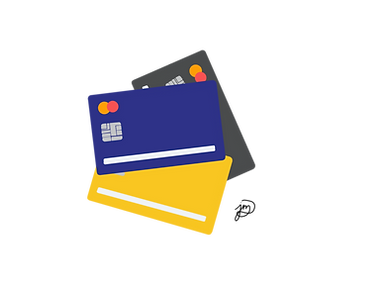
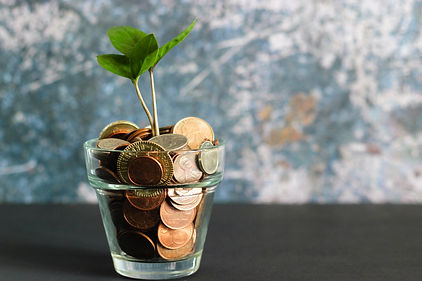
Image by Recha Oktaviani


120514_WWBrock_1

Wendell W. Brock, MBA, ChFC

Subscribe by Email

Follow Me

Most Popular Posts

Other Sites I Follow, hobbies, fun and info:

gold-vs-silver-1.jpg  Nauvoo Mint brokerage services for precious metals


john Mauldin chair

Note:

Outside Economics is not a registered investment advisory firm (RIA) and does not act as an RIA. Outside Economics does not provide any specific investment advice. Any information obtained from this website or through one of  Outside Economics' representatives should be reviewed by a professional.

Subscribers Note: We do not sell our email list. Period. Thank you for subscribing.

Recent Posts