Outside Economics

Shake Up Your Savings Plan

Posted by Wendell Brock on Mon, Mar 20, 2023

Shake Up Your Savings Plan

  • Wendell Brock
  • Mar 20, 2023
  • 2 min read

Inflation is high, money is tight; how can one be expected to put money away into savings? Sometimes it takes a little bit of creativity and thinking outside the box. Now is always the right time to build up your cash reserve.

We’ve all heard the go-to “how to save more money” ideas. Things like, pay off your credit cards, pay with cash, minimize spending, limit or cut down on your subscriptions, use coupons, etc. Those are all really good ideas, but how do you make all that happen? Some of the best advice is to be mindful of what you’re spending and pay more attention to what you’re putting in your shopping cart. Think about what you really need.


One idea is to schedule “no spend days” each month. These are days that, barring an emergency, you don’t spend any money. To make this work you need to be mindful of when you pay your bills. Start with 8-10 no spend days, and as you become more mindful of your spending, try increasing those to 15-20. Eventually you might want to go as far as having a “no spend month” (with the exception of regular bills).

Create a “spending board (or file).” This is where you drop pictures or links to things you want to buy. If you find yourself browsing on a no spend day, put it on your spending board for later. By tapping the breaks on spending, it gives you time to think about the purchase. As you revisit your board you may find yourself deleting things you don’t actually need or want. That’s money saved!
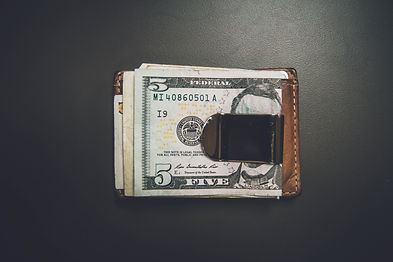

Try the $5 dollar saving trick. Every time you receive a five dollar bill put it into a savings envelope. This could be change from a purchase or money given to you. You’ll be amazed how quickly it all adds up. This trick can also be done with change. All those loose coins can go into a jar to be cashed out at a later time. Another version of this idea is to pull cash out when using your debit card at the store. Whatever you pull out can be put directly into your saving envelope.

Clearly, one of the best ways to have more money is to simply limit how much you’re spending. Our last idea is to start a money-saving hobby or skill. This could be learning to cook your favorite restaurant meals instead of paying to eat out or learning to sew in order to repair and maintain some of your favorite outfits. Learning how to build or fix things around the house means you don’t have to hire someone to do it for you.

As you become more mindful of your spending (and saving) you’ll find bits of money here and there, more than you may have thought.


Photo by Kenny Eliason


Influential Finfluencers

Posted by Wendell Brock on Tue, Mar 14, 2023

Influential Finfluencers

  • Wendell Brock
  • Mar 14, 2023
  • 2 min read

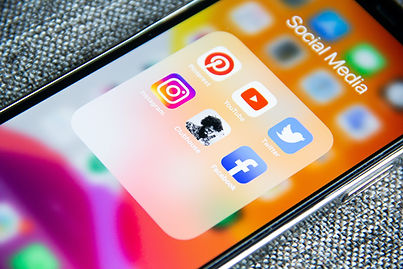
It’s a pretty common practice nowadays, when searching for information, to turn to the internet for answers. Thrown into the mix of every internet search is a slurry of social media platforms, each coming with their own influencers.

There was a huge rise in the number of financial influencers during the 2020 lockdown. During this time people were stuck at home and worried about their finances. They turned to YouTube and other social media sources to learn more about how they could be financially stable during a very unstable time. Now, being called “finfluencers,” these social media influencers offer advice on investments, retirement, and many other aspects of personal finance.


It's becoming more and more common for influencers to take up the financial position, offering advice on the best ways to save money, plan your retirement, and which stocks to invest in. On the surface, the added voices of information and help seem like a good thing, many of them are truly giving beneficial advice. However, this is becoming a problematic situation.

One reason finfluencers are such a controversial topic is because the financial industry is one that is highly regulated for the safety and protection of clients and their money and interests. Online, it’s a different story. There are influencers all over the world and few global precedents to regulate finfluencers. Many popular finfluencers are not officially registered advisors, which has led to illicit practices.

On December 14, 2022 the Securities and Exchange Commission announced charges against eight people in a $100 million securities fraud in which the accused used social media platforms to manipulate exchange-traded stocks in a “pump and dump” scheme.

The North American Securities Administrators Association (NASAA) released an advisory statement August of 2022 stating, “Investors should keep in mind that finfluencers are not subject to the same regulations as licensed financial professionals and may have undisclosed conflicts of interest. Before you consider investing or acting on advice from a social media personality, make sure you understand all the ins and outs of the investment including all potential risks.”

This is not to say that all finfluencers are out to scam and steal your money. Some are licensed financial advisors providing valuable information using social media to better connect with clients and a greater population. But it is essential to remember that just because someone has a large following, multiple likes or shares, or even a verified check mark does not make them a properly licensed professional. They may not have the level of knowledge or ethical standards as a licensed financial advisor.

The final thing to remember is that finfluencers are speaking to a broad range of followers, they are not catering to your individual needs. They don’t know you personally nor have a relationship with you. To them, you’re just a follower. Finances are personal. If you want the best results, they should be handled in a way that reflects your own personal interests.

Photo by: Adem AY


The Inverted Yield Curve

Posted by Wendell Brock on Mon, Mar 06, 2023

The Inverted Yield Curve

  • Wendell Brock
  • Mar 6, 2023
  • 1 min read

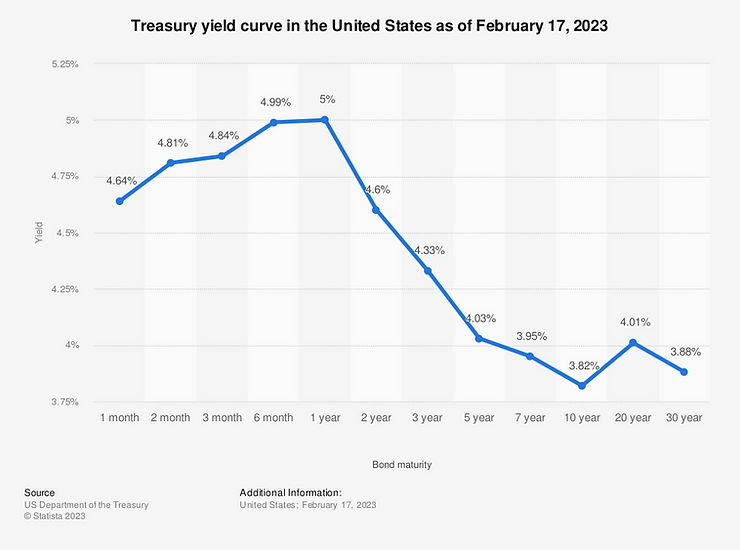
Increasing worry from investors about the financial future can lead to what is called an “inverted yield curve.” An inverted yield curve is where investors pay more for short term bonds than long term, which indicates they do not have a great deal of confidence in long-term financial conditions. Historically, the last five U.S. recessions followed an inverted yield curve.

40-year highs in inflation and Federal Reserve rate hikes played havoc on bonds throughout 2022, sending short and long terms rates to levels not seen in years. Short-term rates remained higher than long-term rates at the end of 2022, indicating a continued inverted yield curve.

The 10-year Treasury note yield started 2022 at 1.52%, peaked at 4.25% on October 24th, and closed the year at 3.88%. The three-month Treasury bill rate, thanks to the Fed’s continuous increase of short-term interest rates to alleviate inflationary pressures, started the year at 0.06% and closed the year at 4.42%.

As of February 2023, the yield for a ten-year U.S. government bond was 3.82%, while the yield for a two-year bond was 4.6%. This again shows that bonds of longer maturities bear a lower yield, reflecting investor’s expectations for a decline in long-term interest rates. This will make long-term debt holders more open to risks under the uncertainty concerning the condition of financial market in the future.


Sources: Federal Reserve, U.S. Department of the Treasury and Statista Research Department.


120514_WWBrock_1

Wendell W. Brock, MBA, ChFC

Subscribe by Email

Follow Me

Most Popular Posts

Other Sites I Follow, hobbies, fun and info:

gold-vs-silver-1.jpg  Nauvoo Mint brokerage services for precious metals


john Mauldin chair

Note:

Outside Economics is not a registered investment advisory firm (RIA) and does not act as an RIA. Outside Economics does not provide any specific investment advice. Any information obtained from this website or through one of  Outside Economics' representatives should be reviewed by a professional.

Subscribers Note: We do not sell our email list. Period. Thank you for subscribing.

Recent Posts