Outside Economics

Sometimes You Wanna Go Where Everybody Knows Your Name

Posted by Wendell Brock on Tue, Jun 27, 2023

Sometimes You Wanna Go Where Everybody Knows Your Name

  • Wendell Brock
  • Jun 27, 2023
  • 2 min read

Updated: Jun 29, 2023

4,844. That’s the number of Federally insured banks in our country. The U.S. has more banks than anywhere on earth; that number is fed by local and regional banking. Small banks have always been a large part of our economy.

Back in March we saw a bank run that caused the collapse of Silicon Valley Bank, the second largest bank failure in U.S. history. Understandably, this brought a lot of fear to anyone banking with a small bank, with the assumption that their bank could fall too. In a short time big banks across the country saw huge deposits as people transferred their money, supposing that these big guys were too big to fail.

What a lot of people may not realize is the major fears that some have are unwarranted. If you have less than $250,00 in the bank your money is covered by FDIC insurance.

Regional and community banks are vital to the U.S. economy. Community banks provide 77% of agricultural loans and over half of the small business loans in our country. Small banks are able to lend to a wider range of people than the big banks. When you bank with a community or regional bank you are supporting a local small business, which means you are supporting your local economy. When you give your money to a big bank, that money goes to support big businesses that may not even know your city or town exists. Small banks are able to tailor their business to the needs of the community. They are also more aware of the needs and the risks within their area, far more than a big bank ever will be. Small banks can perform and provide for their community in ways that big banks simply can’t.


Usually, a local bank is less costly and has lower employee turnover. They may also offer fewer or lower fees and offer more competitive rates. Not only do they offer products and services that are more geared towards your community, but small banks tend to be more interested in meeting the needs of their customers. They recognize that they depend on their customers just as much as their customers rely on them. With a small bank, it’s likely you will work with the same tellers, the same loan officers, and build relationships with the individuals that work at your bank, and they will get to know you.

Wouldn’t you wanna go where everybody knows your name?


It Shall Be

Posted by Wendell Brock on Tue, Jun 20, 2023

It Shall Be

  • Wendell Brock
  • Jun 20, 2023
  • 2 min read

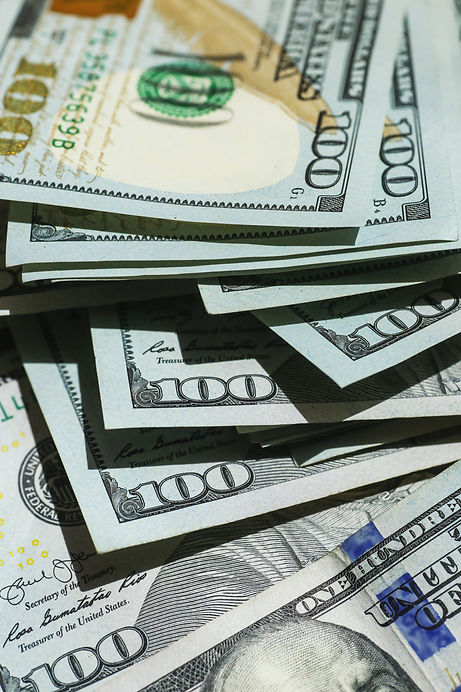
Money exchanges hands every day. Whether its paying cash at the store, using a debit or credit card at the gas pump, or paying bills online. How is it that these myriad ways of spending money is consistent and accepted all across our country? What gives our money it’s value?

At one time, our money was backed by the value of gold, this was known as the gold standard. However, in 1971 President Nixon abandoned the gold standard in an effort to curb inflation and prevent foreign nations from depleting the national stores by redeeming their dollars for gold. With the gold standard the government could only print as much money as they had gold.


Now our country uses fiat money, which is a government-issued currency that is not backed by a commodity, like gold (Not to be confused with “Fiat” the Italian auto maker). The term fiat is Latin for “it shall be” or “let it be done.” When the government issues a value, it shall be; thus, fiat currency only has value because the government says it has value. Our dollars are backed up by the “full faith and credit” of the U.S. government, and considered “legal tender,” instead of “lawful money,” which could be exchanged for gold. This type of money gives the central bank a more flexible system to work with, allowing them more control over the economy and how much money is printed. There is a danger in this, though, when a government prints too much money it results in hyperinflation.

Because fiat money is not linked to a fixed resource like gold, it’s not scare, so central banks are able to control the supply, giving them more power to manage things like credit supply, interest rates, liquidity, and the velocity of money.

While this system works to stabilize the economy and curb inflation, it is a delicate balance. Behind all the bureaucracy and regulations, if a people lose faith in their government, the currency will no longer hold value. In simple terms, our money has value because of the confidence we place in our government. We trust them to honor the value they have set forth.

This can be problematic; if a government begins making choices that the people do not agree with, the people will lose their confidence in the government and their currency would become worthless, crippling the economy.

There is no perfect system. There are pros and cons with both gold standard and fiat money. The one truth that holds true no matter which money system is used: you can’t spend your way out of debt. Which ever currency you have, you need to manage it well.


Photo by Giorgio Trovato


What's the Fed?

Posted by Wendell Brock on Tue, Jun 13, 2023

What's the Fed?

  • Wendell Brock
  • Jun 13, 2023
  • 3 min read

Updated: Jun 14, 2023

There's been a spotlight on the Federal Reserve these past many months as they toe a delicate line of managing inflation and recession. We hear about the increase in interest rates, but aside from the media update, how much do you know about the Federal Reserve?

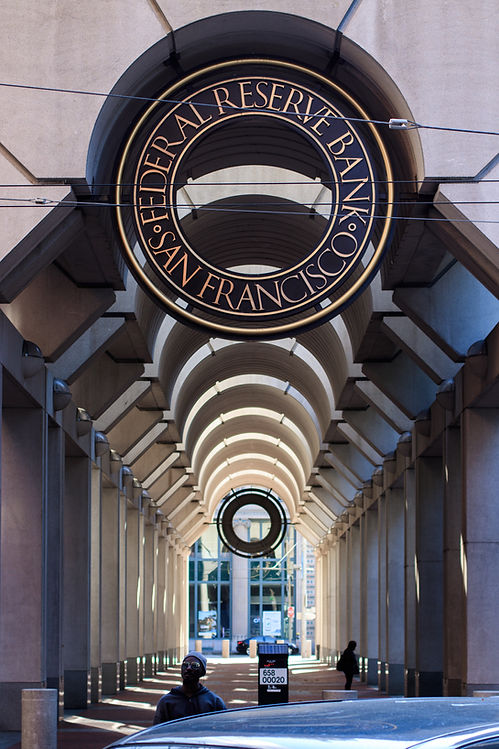
The Federal Reserve, usually just referred to as the Fed, is the central banking system in the United States of America. As a central bank, the Fed is given privileged control of the production and distribution of money and credit. They also formulate monetary policies and regulations of member banks (not all commercial banks are member banks with the Federal Reserve). The overall mission of the Fed is to provide our country with a stable, safe, flexible financial system.

The Fed was established after several repeated financial panics, which led to severe economic disruptions due, in part, to business bankruptcies and overall bank failures. The majority of bankers felt the problem stemmed from our country's lack of a central bank. They believed having a central bank would provide more stability as well as having emergency credit for times of financial crisis. On December 23, 1913 President Woodrow Wilson signed the Federal Reserve Act into law establishing the U.S. central bank.

The Fed has undergone several modifications over the many years in order to adapt to the ever changing demands of our evolving economy. Today the Fed is made up of 3 key entities.


The Board of Governors

The Board of Governors is located in Washington, D.C. and is the governing body of the Federal Reserve System. There are seven “governors,” each nominated by the President of the United States, and then confirmed by the U.S. Senate. Each governor is appointed to serve 14 years. Their responsibilities include setting reserve requirements (the amount banks are required to hold in order to meet sudden withdrawals), setting the discount rates (the interest rate the Fed charges on loans due to financial institutions and other banks), overseeing the operations of the 12 Reserve Banks, and guiding the operation of the Federal Reserve System.

Federal Reserve Banks

There are 12 Federal Reserve Banks; each bank has its own president and district. The bank president is responsible for all the Reserve Bank activities. These banks act as the operating arms of the Federal Reserve. Each of the Reserve banks collect data and information about the businesses and needs of the local communities within its region. That information is used when making monetary and policy decisions.

The Federal Open Market Committee

The Federal Open Market Committee (FOMC) is the Fed’s principal body and sets national monetary policy. They also make all the decisions regarding the conduct of open market operations, including the buying and selling of government securities, which affect the federal funds rate. This third entity is made up of parts from the first two, seven members of the Board of Governors and the president of the Federal Reserve Bank of New York, and 4 of the remaining 11 Reserve Bank presidents, who serve one-year terms on a rotating basis. The Committee is also responsible for monetary policy decisions in three areas: Maximizing employment, stabilizing prices, and moderating long term interest rate.

The Federal Reserve plays a major role in the U.S. Economy; understanding how it operates can help you better understand our country's broader economic policies and the impact they have on you and your community.


Photo by Alex Bierwagen


120514_WWBrock_1

Wendell W. Brock, MBA, ChFC

Subscribe by Email

Follow Me

Most Popular Posts

Other Sites I Follow, hobbies, fun and info:

gold-vs-silver-1.jpg  Nauvoo Mint brokerage services for precious metals


john Mauldin chair

Note:

Outside Economics is not a registered investment advisory firm (RIA) and does not act as an RIA. Outside Economics does not provide any specific investment advice. Any information obtained from this website or through one of  Outside Economics' representatives should be reviewed by a professional.

Subscribers Note: We do not sell our email list. Period. Thank you for subscribing.

Recent Posts