
Outside Economics

The Big, Beautiful Tax Bill—And What It Means for Your Family’s Finances

Posted by Wendell Brock on Thu, Jul 31, 2025

The Big, Beautiful Tax Bill—And What It Means for Your Family’s Finances

  • Wendell Brock
  • Jul 31, 2025
  • 2 min read

On July 4th, President Trump signed the highly anticipated One Big Beautiful Bill (the Bill), a major piece of legislation designed to extend and expand the 2017 tax cuts while adjusting federal spending priorities. Whether you’re a wage earner, retiree, parent, or homeowner, this new law introduces several changes that could directly benefit your financial situation—starting this year.

While the bill’s name suggests it’s enormous, it comes in at about 870 pages—typical for a major legislative package. Packed into those pages are several important tax breaks aimed at individuals and families.


Individuals and Married Filing Joint (MFJ)

The Bill brings a range of impactful tax changes aimed at individuals and families, locking in lower tax rates and expanded deductions for the long term.

· The 2017 tax cuts are now permanent, meaning lower income tax rates and higher standard deductions will no longer expire in 2025.

· Tip income up to $25,000 and overtime pay up to $12,500 are now income tax-free, though these benefits phase out for higher earners.

· An annual $6,000 Senior Tax Bonus is available for individuals over 65, or $12,000 for MFJ.

· The Child Tax Credit is permanently increased to $2,200 per child.

· You can now deduct up to $10,000 per year in auto loan interest, as long as the car is assembled in the U.S.


For Homeowners and Property Tax Payers

Homeowners and property taxpayers may see meaningful benefits, as the new legislation locks in key deductions and raises limits that can significantly reduce taxable income.

· The mortgage interest deduction cap of $750,000 is now permanent.

· Mortgage insurance (PMI) premiums are deductible for incomes up to $100,000.

· The State and Local Tax (SALT) deduction cap is increased to $40,000 for joint filers (with phase-outs beginning at $500,000 in income).


Changes to Clean Energy Incentives

The bill signals a shift in policy by winding down several clean energy incentives that have helped drive “green” adoption in recent years. This will cause these companies to be more competitive in the free market and not be supported by taxpayers.

· The $7,500 EV tax credit ends in September 2025.

· Home energy tax credits for efficient windows, insulation, and HVAC expire in 2026.

· Solar panel and battery storage tax credits are also phasing out after 2026.


If you're considering making energy-efficient upgrades, now may be the time to act to qualify for current incentives. Or... wait and see what happens when companies have to offer their own incentives to get people to buy these items.


This sweeping legislation marks a significant shift in U.S. tax policy, offering new opportunities for savings and long-term planning. To fully benefit, individuals and families should take time to review their tax withholdings, revisit retirement and estate strategies, and consult a financial advisor to ensure they're making the most of the expanded deductions and credits.




10 Smart Tips for Planning a Secure Retirement

Posted by Wendell Brock on Tue, Jul 15, 2025

10 Smart Tips for Planning a Secure Retirement

  • Wendell Brock
  • Jul 15, 2025
  • 2 min read

Planning for retirement can feel like a distant concern or a daunting task—but whether you’re just starting your career or preparing to leave the workforce, the earlier and more thoughtfully you plan, the more confident and comfortable your future can be. Here are ten smart, actionable tips to help you build a strong foundation for retirement.


1. Start Early—Or Start Now

Time is your greatest asset when saving for retirement. The earlier you start, the more your money can grow thanks to compound interest. But even if you're getting a late start, it’s not too late.


2. The Value of Consistency

No matter when you start or how much you invest, consistently contributing to your accounts has the greatest long-term impact. Building this habit takes effort and self-discipline, but it’s a powerful financial muscle that pays off over time.


3. Envision Your Retirement Lifestyle

Do you dream of quiet mornings at home, frequent travel, or pursuing a hobby or side project? Defining what retirement looks like for you will help determine how much income you’ll need to support it.


4. Estimate How Much You'll Need

Many experts recommend replacing 70% to 80% of your   pre-retirement income. Be sure to account for inflation, health care, taxes, and a potentially long retirement. Retirement calculators with a financial advisor can help you arrive at a personalized estimate.


5. Maximize Your Retirement Accounts

Make use of tax-advantaged accounts like 401(k)s, IRAs, and Roth IRAs. If your employer offers a match on your 401(k), contribute enough to get the full employer match—it’s essentially free money.


6. Invest for Growth—With Balance

Diversify your investments across stocks, bonds, and other assets based on your age, risk tolerance, and retirement timeline. Trying to time the market rarely pays off—what matters most is staying invested over time.


7. Reduce or Eliminate Debt

The less debt you carry into retirement, the more flexibility you’ll have. Focus on paying off high-interest debt first, such as credit cards and personal loans. If possible, aim to       reduce or eliminate larger debts like mortgages and auto loans before retiring.


8. Plan Ahead for Health Care

Health care can be one of the largest expenses in retirement. While Medicare covers many basics starting at age 65, it doesn’t cover everything. Consider supplemental insurance, and use a Health Savings Account (HSA), if available, to build tax-free savings for future medical costs.


9. Reevaluate Your Housing Situation

Your home may be one of your largest assets—and expenses. Consider whether it makes sense to stay put, downsize, relocate, or tap into home equity to support your retirement goals.


10. Create a Sustainable Withdrawal Strategy

Decumulation of retirement assets is even more critical than the accumulation phase. Plan when and how you’ll draw income from Social Security, retirement accounts, and   pensions. A strategic withdrawal plan can reduce taxes, extend savings, and protect against costly mistakes that can ruin a retirement plan.


BONUS Tip: Review and Adjust Your Plan Annually

Your life and financial situation will evolve. Revisit your retirement plan every year—or after major life changes—to stay on track and make informed adjustments.


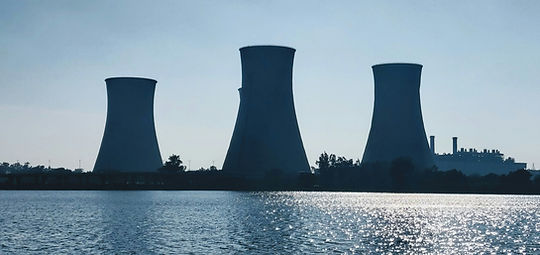
The Nuclear Power Renaissance

Posted by Wendell Brock on Mon, Jul 14, 2025

The Nuclear Power Renaissance

  • Wendell Brock
  • Jul 14, 2025
  • 2 min read

The rapid rise of artificial intelligence has ushered in an era of unparalleled innovation, and it seems to be permeating every industry. But while the front end of AI dazzles with machine learning, natural language processing, and autonomous capabilities, it masks an escalating crisis at the back end: power.


AI systems consume exponentially more electricity than traditional computing tasks. A single AI query may require 10 times the energy of a standard Google search. With the explosive growth of data centers and generative AI models, energy consumption is expected to triple by 2027. Already, AI infrastructure uses as much energy as some small countries—a burden that current energy grids, especially those dependent on fossil fuels or intermittent renewables, are ill-equipped to handle.

Enter nuclear power. Often overlooked in past decades, nuclear energy is now re-emerging as the only scalable, carbon-free solution capable of sustaining AI’s relentless energy appetite. A single uranium fuel pellet—no bigger than an AA battery—can produce as much energy as three barrels of oil, 17,000 cubic feet of natural gas, or a ton of coal. And all for just $5, with almost no carbon emissions. Operating at a 92% capacity factor, nuclear is the most reliable energy source on Earth—perfectly suited for the 24/7 demands of artificial intelligence.


Major technology firms are already acting. Microsoft is restarting operations at the famed Three Mile Island facility. Amazon is developing data center campuses adjacent to nuclear plants. Google is securing energy from next-generation reactors, while Meta plans to draw 4 gigawatts of nuclear power by 2030. Tesla, Nvidia, and Apple are also integrating nuclear energy into their operations. Advancements in nuclear technology are enabling companies to develop smaller, more efficient plants that offer enhanced safety and greater energy output.


But the relationship is mutual. AI isn’t just consuming nuclear power—it’s helping to enhance it. At California’s Diablo Canyon nuclear facility, AI tools are already being used to optimize reactor efficiency and improve safety protocols. The U.S. Department of Energy is supporting efforts to digitize and streamline the regulatory process using AI, potentially cutting the time it takes to approve and deploy new reactors.


On a global scale, countries like China, India, France, and Canada are accelerating nuclear investments, with China alone committing $440 billion. The International Energy Agency forecasts that nuclear investments will triple to $125 billion annually by the late 2020s.

This convergence of AI and nuclear power also presents a unique investment opportunity. One U.S.-based uranium company—valued at $1 billion, trading under $10 a share, with $150 million in cash and no debt—is positioned to ride the wave of demand. In previous nuclear booms (no pun intended), similar companies saw gains of over 1,000%.


As the world races toward an AI-driven future, the demand for clean, consistent, and scalable energy will define who leads and who lags. Nuclear power isn’t just a fallback—it’s becoming the foundation. The AI revolution may be digital at its core, but its lifeblood is electricity—and nuclear is poised to be the fuel that powers it all.


120514_WWBrock_1

Wendell W. Brock, MBA, ChFC

Subscribe by Email

Follow Me

Most Popular Posts

Other Sites I Follow, hobbies, fun and info:

gold-vs-silver-1.jpg  Nauvoo Mint brokerage services for precious metals


john Mauldin chair

Note:

Outside Economics is not a registered investment advisory firm (RIA) and does not act as an RIA. Outside Economics does not provide any specific investment advice. Any information obtained from this website or through one of  Outside Economics' representatives should be reviewed by a professional.

Subscribers Note: We do not sell our email list. Period. Thank you for subscribing.

Recent Posts