
Outside Economics

Understanding Stock Market Indices

Posted by Wendell Brock on Tue, Apr 15, 2025

Understanding Stock Market Indices

  • Wendell Brock
  • Apr 15, 2025
  • 3 min read

The U.S. stock market is a massive and dynamic marketplace where investors trade shares of publicly listed  companies. It’s a whirlwind dictated by financial strategies, social trends, geopolitical events, and driven by quarterly earnings. It offers opportunities to grow your wealth, as well as potential risks. Prices fluctuate as demand ebbs and flows. The stock market is an anchor to our economy, a major source for capital growth, and yet is volatile and unpredictable. The market swings up and down depending on how people are feeling about individual company performance, the economy, politics, or the latest trends.



The stock market is divided into indices to reflect various segments of the market based on company size, sector, investment style, and so forth. These divisions allow investors to make more informed decisions by focusing on specific areas of the market that match their interest, risk tolerance, and goals.


Stock market indices are used as benchmarks that illustrate the performance of a group of specific stocks, which can reflect the overall health of a sector or the entire market. These indices are used to gauge market performance, make comparisons across the market, and track trends over time. The most well-known indices in the U.S. stock market are Dow Jones Industrial Average (DJI, created in1896), Standard & Poor’s 500 (SPX, created in 1957), Nasdaq Composite (IXIC, created in 1971), and Russell 2000 (RUT, crated in 1984).


The Dow Jones Industrial Average is one of the oldest  indices in our market. It was created in 1896 by Charles Dow. It includes 30 well-established, publicly traded, financially stable, and reputable companies known for their consistent performance and dividend payouts. This makes their stocks a popular choice for investors seeking stability. The DJIA is a price-weighted index, which means the stock with higher prices have a greater impact on the index’s movement.


The S&P 500 is a broader index which includes 500 of the largest companies listed on the U.S stock exchanges. It is regarded as a more accurate reflection of the overall market than the DJIA because it includes a wider range of companies spanning 11 various sectors like technology, healthcare, finance, and consumer goods. It provides a balance between growth and value stocks. This index is market-cap weighted, which means that companies with larger market capitalization have a greater influence on its movement.


The Nasdaq Composite tracks the performance of over 3,000 stocks listed on the stock exchange. It is heavily weighted towards technology companies and is used as a primary gauge for the tech sector. It includes tech   giants like Apple, Amazon, NVIDIA, and Microsoft, but it also contains smaller tech startups and other growth-focused companies. It can be more volatile but can also offer higher growth potential. This index is also a market-cap weighted index.


The Russell 2000 tracks 2,000 small-cap companies and is a subset of the Russell 3000, a broader index containing the 3,000 largest U.S. companies. The Russell 2000 includes smaller companies with a market capitalization between $300 million and $2 billion. This index is also   market-cap weighted, with smaller companies having less impacts on the index’s overall performance.
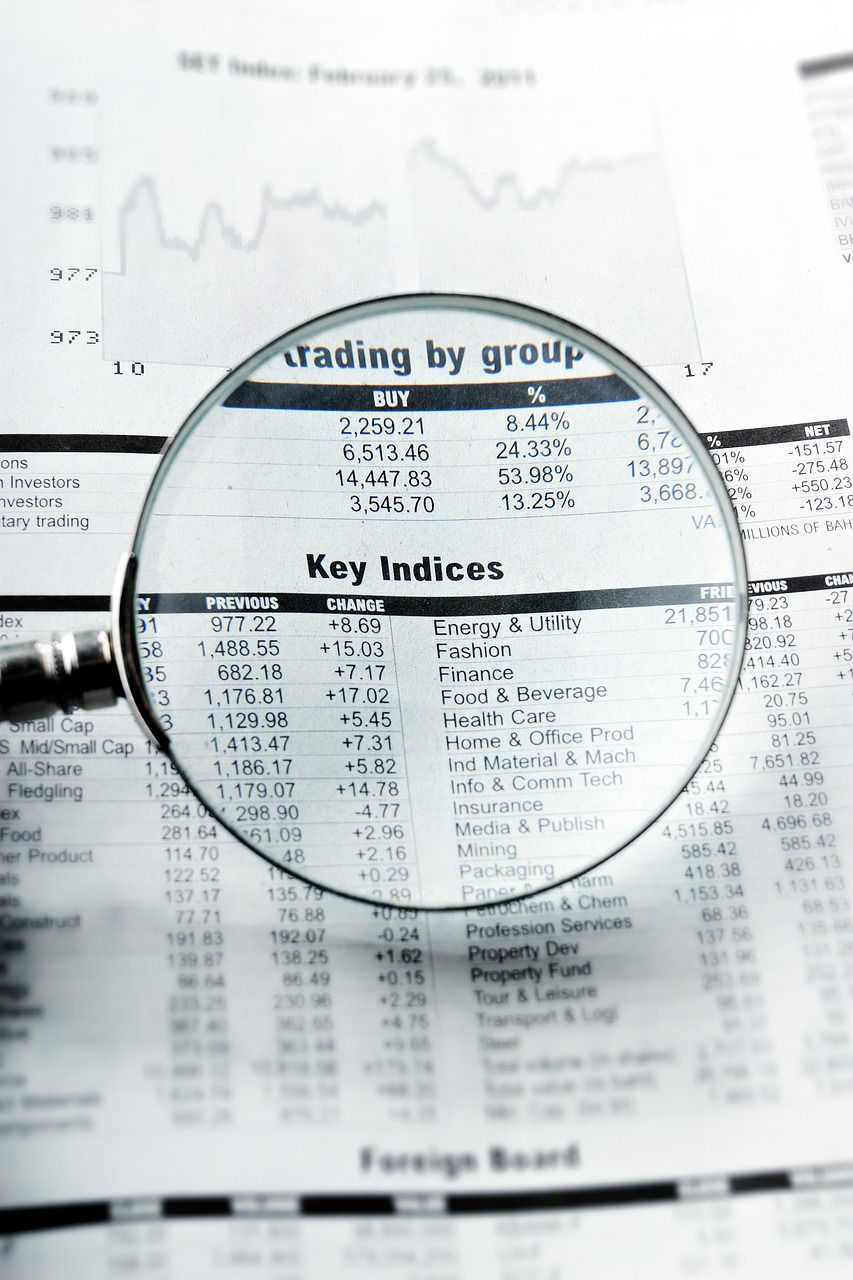


Stock market indices serve as a barometer for different sectors, regions, and the global economy providing insights into trends in various industries. Each index may behave differently depending on its composition. By following the different indices investors can better understand the broader economic movements and make more informed decisions regarding their investments.


Photo 1 by Gerd Altmann

Photo 2 by Gino Crescoli



Time: The Ultimate Currency

Posted by Wendell Brock on Thu, Apr 10, 2025

Time: The Ultimate Currency

  • Wendell Brock
  • Apr 10, 2025
  • 3 min read

In today’s ever demanding, fast paced, rapidly changing world we are always being pulled in many directions at once. We’re faced with constant connectivity, over stimulation, and a relentless focus on speed and efficiency. We face a daily battle splitting us between two important resources: Time and Money.


The value of our time and the value of money has never been more relevant. Both of these resources are finite, and both resources represent different forms of wealth. Money is an emotional, tangible asset that can be accumulated, spent and invested. However, time is intangible, cannot be stock piled, and once spent, cannot not be regained. Finding a balance between these two assets shapes our decisions, priorities, and the overall framework of our lives.


Our time can be broken down into three categories – work, relationships, and recovery.         Focusing on the work category of time, there are different stages of life which gives a different value to our time. At the beginning of a career, you have good health, a good amount of time, but not as much money. Later in your career you accumulate more money, but it’s been traded for time. Now you’re spending more of your time to acquire money. Later in life, as you’re about to retire, the money and time tend to balance out, but it’s at a time when you may not have the health of your youth.


It's possible to bring the imbalance into more of an equilibrium when we practice good time management skills and consciously align how we spend our time with our goals and values.

We often hear time is money, reversing that, and   looking at our money in units of time can help determine the true value of something. Determining value is a skill to develop; start by asking yourself, “am I willing to work the hours necessary for the required sum?” This is where time and money become emotional.


It’s arguable that our time becomes even more valuable the older we get. This is especially true if we have used our time wisely throughout our life. Making good investments with our time, doing things that build our life as well as the lives of others, increases the value of our time.


We currently live in an age where we are surrounded by time saving things, technology and tools that help make our lives easier and more accessible. Even the simplest person has wealth beyond what any previous generation had. Most people have a smart phone these days, an incredible tool that compared to the newest computers of generations past, is quite affordable. While attending college I purchased my first computer in 1984 with 128K memory. Even with the student discount, after purchasing some accessories, an external 2nd drive, a printer, a few programs, and a box of disks the cost was over $5,000. While this new technology saved me time, it can’t hold a flame to the value we get from our most common devices today. This makes us quite rich in time and money.


How we spend our time and the choices we make in spending our money determine the true value of it. Time and money are both invaluable resources, but they need to be managed carefully in order to achieve a balanced and successful life. Time is       irreplaceable, while money can act as a means to provide comfort, opportunities, and freedom. The key lies in finding the balance. These two things work in tandem to create a life that is wealthy in financial terms, as well as personal satisfaction and peace.


Photo 1: Garik Barseghyan


120514_WWBrock_1

Wendell W. Brock, MBA, ChFC

Subscribe by Email

Follow Me

Most Popular Posts

Other Sites I Follow, hobbies, fun and info:

gold-vs-silver-1.jpg  Nauvoo Mint brokerage services for precious metals


john Mauldin chair

Note:

Outside Economics is not a registered investment advisory firm (RIA) and does not act as an RIA. Outside Economics does not provide any specific investment advice. Any information obtained from this website or through one of  Outside Economics' representatives should be reviewed by a professional.

Subscribers Note: We do not sell our email list. Period. Thank you for subscribing.

Recent Posts