Outside Economics

Every Dollar a Decision

Posted by Wendell Brock on Thu, Jun 19, 2025

Every Dollar a Decision

  • Wendell Brock
  • Jun 19, 2025
  • 3 min read

In today’s fast-paced, hyper-consumer society, one of the most powerful yet overlooked truths about money is this: you can only spend a dollar once. It may sound simple, but this principle has deep implications for how we manage our finances—and ultimately, our lives.

Every time you make a purchase, you're not just choosing what to buy, you're choosing what to give up. This is the essence of opportunity cost: by spending money on one thing, you sacrifice the chance to spend it on something else—whether that’s saving for a future goal, investing in your education, or simply building financial security.
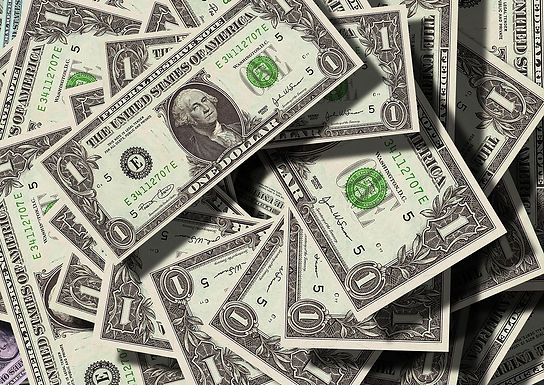
Spending wisely, therefore, isn’t just about frugality. It’s about intentional decision-making. It takes self-discipline, planning, and a willingness to delay gratification—traits that run counter to today’s culture of "immediately- now, now,now, now!." We're bombarded by ads, frictionless payment systems, and same-day delivery, all of which make it easier than ever to spend mindlessly.


But money is emotional, just like food. Many of us grow up without financial education, and conversations about money can be awkward or even taboo. Yet, we deal with it daily—whether we’re earning, spending, saving, or worrying about it.


One eye-opening realization for many people is that earning more doesn’t solve poor spending habits. No matter how much you make, each dollar still only gets to be used once. Recognizing this can transform how you view money. It shifts your focus from “how much can I earn?” to “how wisely can I spend?”


To start changing your relationship with money, try keeping a money journal. Record every expense, no matter how small. When one person did this, they discovered their daily $4.30 latte was costing them $1,570 a year. That single habit—repeated daily—was silently consuming a significant portion of their budget.


Ask yourself: Are you happy with where your dollars are going? How could the money be spent more wisely what could it be doing for you instead? In that brief moment, the latte might make you feel good bring joy in the moment, but would you be happier in the long run if that money helped pay off debt or funded a vacation? This doesn’t mean that you can’t have the latte, maybe just not daily.


Also consider this: a dollar saved is worth more than a dollar earned. Earnings are taxed—sometimes heavily—while saving money incurs no tax. In higher tax brackets, saving a dollar could be equivalent to earning two. And yet, we spend decades in education and careers to earn money, while often investing little energy in learning how to manage it wisely.


To spend more deliberately, start by building a budget:

· Track all income and expenses for a few months.

· Categorize spending into needs and wants.

· Choose a budgeting method like the 50/30/20 rule or zero-based budgeting.

· Set specific goals—whether paying off credit cards, saving for a home, or building an emergency fund.


Monitor your progress regularly and adjust when needed. Good financial habits, like automating savings, avoiding impulse buys, cooking at home, and comparison shopping, can add up to major gains over time.


Ultimately, managing money well isn’t about restriction—it’s about freedom. When you remember that each dollar can only be spent once, you begin to treat it with the respect it deserves. And that’s the first step toward financial peace of mind.


Photo by geralt



The Vanishing Dream of Homeownership

Posted by Wendell Brock on Thu, Jun 19, 2025

The Vanishing Dream of Homeownership

  • Wendell Brock
  • Jun 19, 2025
  • 2 min read

Buying a home has become a daunting task for first-time buyers in the U.S., with high mortgage rates, inflated prices, and limited inventory creating an environment that feels nearly impenetrable. As of May 2025, the national average for a 30-year fixed mortgage is 6.85%, according to Bankrate.com—up from last week and a far cry from the low rates of the pandemic era.

With the median home price around $403,700, even a modest 5% down payment requires over $20,000 upfront. For those who can afford that, monthly payments—taxes and insurance included—average about $4,000, or nearly $48,000 a year. That effectively prices out anyone earning under $100,000, not accounting for taxes or other living costs.


These harsh financial realities are fueling a growing   belief among younger generations that homeownership is no longer realistic. Why save for something that feels unattainable when immediate spending offers more satisfaction? It’s a sharp contrast to older generations, for whom owning a home was a defining milestone.


While today’s mortgage rates are similar to those seen in the 1970s through the 1990s, the comparison ends there—home prices back then were significantly lower, making monthly payments far more manageable. Many baby boomers paid just a few hundred to a thousand dollars a month for their mortgages. In contrast, with today’s median home price around $403,700, even a modest 5% down payment exceeds $20,000, and average monthly payments—including taxes and insurance—have climbed to about $4,000. That’s nearly $48,000 a year, effectively pricing out many households earning under $100,000 annually. A $1,100 mortgage, once considered high, now feels like a relic from a far more affordable era.


Part of the problem lies in regulations that, while ensuring safety, have driven up costs and limited flexibility. Critics argue that zoning and permitting laws stifle innovation, preventing affordable options like tiny homes from addressing demand—especially in urban areas.


Natural disasters, such as recent building losses in California, have also driven up material costs. Combined with labor shortages and rising land prices, building new homes is becoming increasingly difficult for the average American.


Despite a 31% year-over-year increase in inventory—a six-year high—affordability remains elusive. The "lock-in effect" keeps many homeowners from selling, as they cling to historically low interest rates, reducing mobility and supply.


Experts don’t predict a crash, but a slow, uneven adjustment. Regional differences will shape outcomes, with some markets remaining more accessible than others.


Ultimately, the U.S. housing market sits in tension between past expectations and present realities.  Without significant changes to boost affordability and supply, the dream of homeownership may continue to slip further out of reach.


120514_WWBrock_1

Wendell W. Brock, MBA, ChFC

Subscribe by Email

Follow Me

Most Popular Posts

Other Sites I Follow, hobbies, fun and info:

gold-vs-silver-1.jpg  Nauvoo Mint brokerage services for precious metals


john Mauldin chair

Note:

Outside Economics is not a registered investment advisory firm (RIA) and does not act as an RIA. Outside Economics does not provide any specific investment advice. Any information obtained from this website or through one of  Outside Economics' representatives should be reviewed by a professional.

Subscribers Note: We do not sell our email list. Period. Thank you for subscribing.

Recent Posts